T: +86-139-5050-9685
E: sales@bycpower.com
E: sales@bycpower.com
No. 13, Jincheng road, Tiehu village, Chengyang town, Fuan city, Fujian, China


Views: 0 Author: Site Editor Publish Time: 2026-04-25 Origin: Site


Even a momentary power loss at a cell tower forces ground equipment to reset. This causes dropped data streams and extensive network downtime. Modern communications tolerate exactly zero seconds of offline status. With the massive power demands of modern 5G equipment, relying solely on battery cabinets is no longer a viable long-term fail-safe. High-frequency modules drain standard reserves much faster than legacy systems ever did. Prolonged grid outages leave networks vulnerable to unacceptable coverage blind spots.
We designed this guide to help facility managers avoid critical failures. It provides telecom engineers an evidence-based framework for specifying a standby generator for telecom sites. You will learn how to balance electrical load requirements and physical site constraints. We will also explore how to meet strict compliance standards confidently. Proper selection ensures your network stays operational during extreme weather, utility grid failures, and rolling blackouts.
A telecom generator must handle highly non-linear UPS loads; specifying based purely on gross kW will lead to system rejection.
Standard base station loads typically range from 15kW to 60kW, with HVAC systems often consuming more power than the actual transmission equipment.
Site geography dictates configuration: high altitude requires power derating, while urban sites heavily favor natural gas or acoustically treated enclosures over standard diesel.
Continuous operation relies on a flawless automated sequence: Grid loss → UPS/Battery buffer → ATS delay → Generator takeover.
When utility power drops, a cell site enters a critical vulnerability window. Ground equipment cannot tolerate even a millisecond of voltage drop. Sites rely on a perfectly choreographed transition sequence to keep data flowing.
Continuous operation depends entirely on an automated sequence. Facility managers refer to this timeline as the golden 10 seconds. Here is how the sequence progresses:
Grid Loss: Utility power drops below an acceptable voltage threshold.
UPS Buffer: Battery cabinets instantly assume the electrical load. This prevents immediate hardware resets.
ATS Delay: The Automatic Transfer Switch (ATS) waits for a pre-programmed delay. This 3-to-5-second pause ensures the outage is real, ignoring brief grid flickers.
Generator Takeover: The emergency power generator cranks, stabilizes its voltage, and accepts the site load. The ATS completes the switch seamlessly.
You must protect highly sensitive transmission hardware during this transition. Components like Diplexers, Tower-Mounted Amplifiers (TMA), and Remote Radio Heads (RRH) require strict, uninterrupted power. Microwave antenna chassis also demand absolute power stability. If the transition sequence stutters, these components will reboot. A reboot forces network controllers to re-establish terrestrial links, causing widespread dropped calls.
You cannot ignore the reality of 5G power consumption. Modern high-frequency 5G modules demand immense electrical input. During extended outages without generator support, batteries drain rapidly. Carriers are often forced into emergency power conservation. They will dynamically shut down high-draw 5G modules, like C-band or n41 antennas. This preserves remaining battery life for basic 4G connectivity. A properly sized engine eliminates this compromise. It allows the tower to broadcast its full 5G spectrum regardless of grid status.
Accurate sizing prevents catastrophic failure. If you undersize the unit, it will stall during transition. If you oversize it severely, you risk wet stacking the diesel engine.
Standard cellular tower sites generally require a backup generator for base station operations ranging between 15 kW and 60 kW. The exact size depends on the tower density, the number of carriers renting space on the structure, and the local climate. Facility managers must conduct a rigorous audit of the site's maximum historical draw before selecting an engine block.
A common mistake is assuming the transmission gear consumes the most electricity. In reality, the pure power draw of the communication equipment is only a fraction of the total load. Shelters generate extreme heat. The HVAC systems required to cool these equipment shelters often represent the largest power draw on the site.
Below is a simplified breakdown of a hypothetical 40 kW site load:
Equipment Category | Estimated Power Draw (kW) | Percentage of Total Load | Load Type |
|---|---|---|---|
HVAC / Environmental Cooling | 22.0 kW | 55% | Inductive (Motor) |
Baseband & Transmission Gear | 12.0 kW | 30% | Non-Linear (UPS) |
Tower Lighting & Security | 2.0 kW | 5% | Linear / Resistive |
Security Margin / Future Expansion | 4.0 kW | 10% | Buffer |
We recommend adding a 10% to 20% security gap to the total running wattage. This margin serves two purposes. First, it accommodates future network upgrades as carriers add more radio heads. Second, it absorbs high inrush currents. HVAC compressors demand massive surges of starting wattage when they cycle on. The alternator must handle this sudden spike without allowing the voltage to collapse.
Always standardize your evaluation metrics. You must calculate all electrical loads in kilowatts (kW). Avoid relying on crude amperage conversions. Amperage readings fluctuate based on system voltage and phase configurations. Using strict kW calculations ensures your specifications remain universally accurate across different equipment vendors.
Telecom infrastructure introduces complex electrical challenges. The way a cell site consumes power differs greatly from a standard commercial building. Understanding these load characteristics separates successful deployments from immediate system rejections.
Telecom sites rely heavily on rectifiers and inverters housed within their UPS systems. These components convert incoming AC power to DC for the batteries, and back to AC for the hardware. This conversion creates high proportions of non-linear loads, commonly known as Silicon-Controlled Rectifier (SCR) loads. Non-linear loads pull current in abrupt pulses rather than smooth waves. This strains standard alternators significantly.
If the engine produces high harmonic distortion, the UPS will detect dirty power. The UPS will actively refuse the incoming power and continue draining the batteries. This leads to complete site failure even while the engine runs perfectly. To combat this, you must specify an oversized alternator. An oversized alternator safely dissipates the excessive heat generated by harmonic distortion.
A reliable telecom generator demands precision engineering. You must require a Permanent Magnet Generator (PMG) excitation system. Standard self-excited systems struggle to recover from sudden load impacts. Additionally, mandate a premium Automatic Voltage Regulator (AVR). The AVR must maintain voltage variations below 0.5%. These combined components ensure a clean, smooth sine wave that sophisticated UPS modules will easily accept.
Site geography heavily dictates your fuel choices and physical configurations. What works for a remote mountain peak will violate zoning laws in a suburban neighborhood.
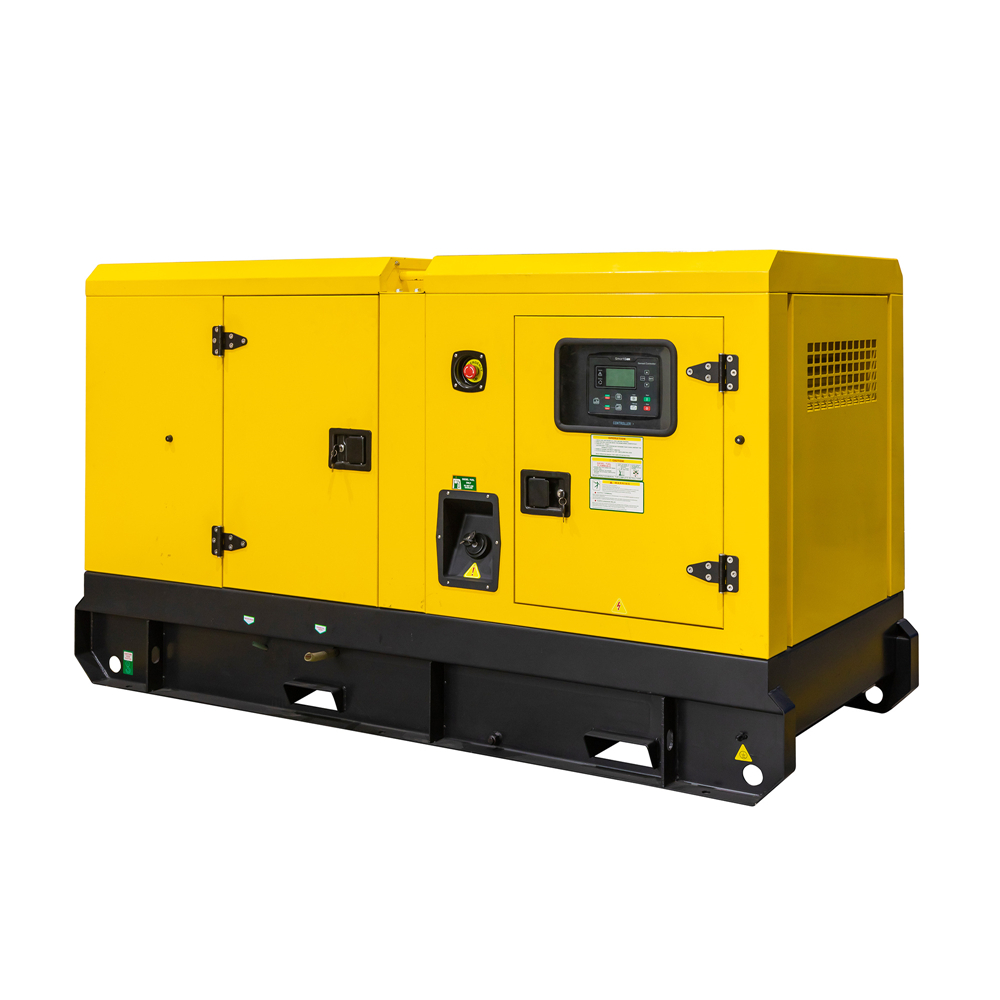
Diesel remains the industry standard for remote deployment. It offers unmatched fuel density and rugged engine durability. Diesel engines easily handle the aggressive load steps required by cell towers. However, when deploying near residential zones, noise becomes a critical issue. You must mandate a silent diesel generator. These specialized units feature custom acoustic enclosures. They use dense foam linings, baffled air intakes, and critical-grade exhaust silencers. Isolation mounts beneath the engine block also reduce physical vibrations transferred to the ground.
Evaluate natural gas solutions for urban environments. Buried utility lines provide essentially infinite runtime. Natural gas eliminates the need for refueling trucks to navigate flooded roads during storms. For strict emissions compliance, discuss bi-fuel systems. A bi-fuel engine starts on diesel to provide strong initial torque. Once running, it seamlessly substitutes up to 75% of the diesel with natural gas. This acts as a modern compromise. It extends on-site runtime drastically while lowering overall emissions.
Many legacy towers face strict lease boundaries. Spatial restrictions or aggressive local zoning often prevent the installation of fixed concrete pads. For these un-permittable sites, you must rely on operational logistics rather than permanent hardware. Outline a strategy utilizing Roll-Up Generators (RUGs). Technicians deploy these units via truck-drawn trailer interfaces. They plug directly into pre-wired cam-lock receptacles at the tower base. While manual, this circumvents permanent installation restrictions effectively.
You cannot deploy standard off-the-shelf equipment into extreme environments. Environmental variables impact combustion efficiency directly.
Engine combustion relies on basic physics. High elevations mean thinner air. Less oxygen in the cylinder reduces the power output per stroke. You must apply specific derating calculations to ensure the engine meets the required kW output. As a general industry practice, expect roughly a 3% power loss for every 1,000 feet above sea level. Extreme ambient heat also requires derating due to decreased air density. Always consult the manufacturer's specific derating curves before finalizing a purchase for a mountain site.
Coastal and high-humidity deployments require proactive hardware protection. Specify anti-condensation heaters for the alternator windings. These heaters activate when the engine is off, preventing morning dew from shorting the electrical components. Additionally, mandate salt-corrosion-resistant housings. Standard powder-coated steel will rust through quickly near the ocean. Opt for heavy-duty aluminum or specialized marine-grade coatings.
Local jurisdictions strictly govern infrastructure upgrades. Ensure your configurations adhere strictly to regional seismic building codes. High-wind zones require specific enclosure tie-downs and aerodynamic profiles. Electrically, installations must meet standards like ISO 8528 and NFPA 110. NFPA 110 Type 10 compliance mandates that the system must restore power within 10 seconds of grid failure. You should also consider the integration of Data Center Power (DCP) rating concepts. DCP ratings allow the equipment to run continuously under high load demands, guaranteeing maximum uptime.
Securing telecom infrastructure requires precise engineering and proactive planning. Keep the following action steps in mind as you upgrade your sites:
Implement Smarter Scaling: Advise facility managers evaluating multi-site upgrades to consider Modular Power Systems (MPS). Paralleling units on the low-voltage side reduces switchgear complexity. It lowers up-front integration costs and increases technician safety compared to traditional medium-voltage setups.
Prioritize Load Testing: Equipment is only as reliable as its maintenance schedule. Long-term site viability requires regular, documented load testing under peak simulation. Basic, un-loaded run exercises invite wet stacking and false confidence.
Plan Your Next Steps: Prompt your engineering teams to audit current cell tower battery capacities immediately. Measure actual summer HVAC loads. Once you establish accurate kW demands, request a formalized sizing consultation. For planned infrastructure upgrades, consider securing short-term rental options to bridge any operational gaps.
A: Typically 15-60kW, factoring in HVAC, lighting, and core transmission equipment.
A: To provide a clean, stable sine wave required by non-linear UPS systems, preventing harmonic distortion that causes the UPS to reject the generator's power.
A: Usually 2 to 4 hours on standard battery cabinets alone, drastically less if high-draw 5G modules remain active during the outage.