T: +86-139-5050-9685
E: sales@bycpower.com
E: sales@bycpower.com
No. 13, Jincheng road, Tiehu village, Chengyang town, Fuan city, Fujian, China


Views: 0 Author: Site Editor Publish Time: 2026-06-05 Origin: Site


For technical procurement and engineering teams, specifying a generator goes far beyond evaluating basic power output. The long-term reliability of any industrial system hinges heavily on two critical environmental defenses. These vital metrics are physical ingress protection (IP) and thermodynamic endurance (insulation class). While the transition to modern designs eliminates mechanical wear points like slip rings and carbon brushes, new challenges quickly emerge. This structural shift moves the primary causes of electrical failure directly to moisture, dust, and internal heat degradation. If you ignore these specific factors, your equipment lifespan drops drastically.
This guide comprehensively breaks down the engineering realities and standard compliance rules you need. We explore the nuanced cost-benefit trade-offs of IP ratings and insulation classes. You will learn to specify the exact right equipment with total confidence. Our engineering insights help you avoid wasteful over-engineering while fully protecting your heavy machinery investment.
The "Rule of 10": Operating an alternator 10°C below its maximum thermal rating effectively doubles its insulation lifespan.
IP Protection vs. Thermal Efficiency: Higher IP ratings (like IP44) trap heat, often requiring structural derating or larger frame sizes compared to standard IP23 configurations.
Specification Arbitrage: Specifying a high insulation class (Class H) with a lower temperature rise allowance (Class F) offers maximum thermal margin and better transient response without exponential cost increases.
Application Dictates Spec: Standby generators can safely operate near their thermal limits due to low lifetime running hours, while Prime/Continuous setups demand strict thermal margins to prevent premature failure.
Traditional brushed motors fail frequently due to constant friction, high vibration, and physical brush wear. Airborne dirt and sticky grime heavily exacerbate these mechanical breakdowns over time. An AC brushless alternator entirely eliminates over ten high-wear moving components. You instantly remove fragile slip rings and delicate carbon brushes from the reliability equation. This massive structural upgrade shifts your daily engineering focus. We no longer worry about scheduling constant mechanical maintenance cycles. Instead, we must focus our attention purely on environmental sealing and thermal defense.
The core vulnerabilities of the machine change entirely. You deal mostly with static current-carrying components now. The remaining threats to any modern generator alternator are highly specific and environmentally driven. External particle and water ingress stand out as the primary operational risks. They rapidly degrade internal dielectric strength, causing devastating short circuits. Internal heat accumulation presents the second major systemic threat. Unchecked internal heat breaks down copper winding enamel rapidly.
Buyers must balance physical barriers against rigid thermodynamic realities. You meticulously evaluate the physical shield provided by the IP rating. You then weigh it carefully against the internal thermal limits set by the insulation class. Achieving optimal operational lifespan requires strict, ongoing attention to both metrics. To succeed, procurement teams evaluate three main operational factors:
The specific environmental contaminants historically present at the installation site.
The total cubic airflow and cooling capacity available within the generator enclosure.
The mathematically projected duty cycle and maximum transient load demands.
Addressing these three factors ensures you select robust equipment built to survive.
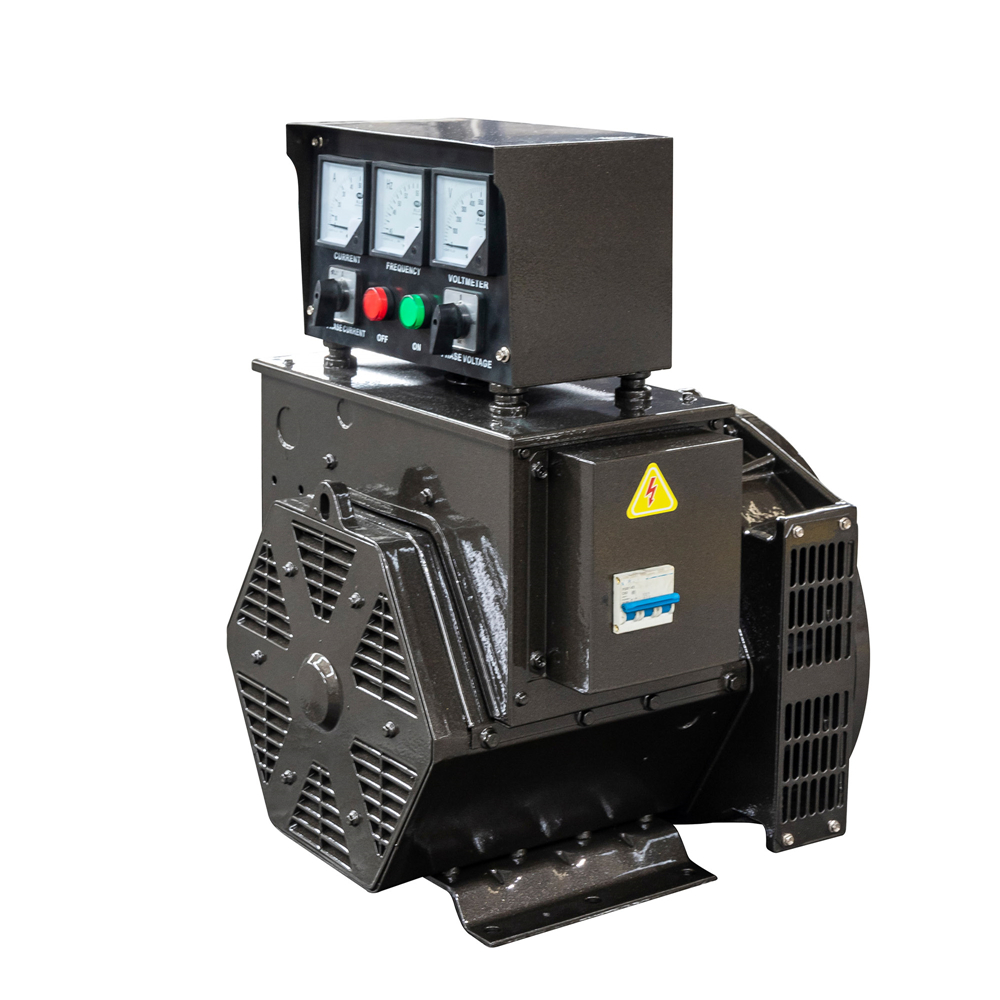
Engineers define physical protection globally using the strict IEC 60034-5 standard. The brushless alternator IP rating utilizes a remarkably simple two-digit code. The first digit indicates solid particle protection on a scale stretching from 0 to 6. The second digit denotes active liquid protection on a scale from 0 to 9. You absolutely need to understand exactly what these numbers mean for field performance.
Let us look closely at the recognized industry baseline. An IP23 alternator serves as the undisputed standard for indoor applications. It also functions perfectly for sheltered outdoor enclosures equipped with louvers. This specific rating protects internal components against solid objects larger than 12.5mm. It also reliably deflects direct water spray at angles up to 60 degrees. IP23 designs inherently offer maximum internal airflow. This unrestricted ventilation provides optimal cooling efficiency for the heated copper windings.
However, engineers face a severe aerodynamic trade-off when moving from IP23 to IP44 or higher. Unforgiving environments strictly demand upgraded physical defenses. Active quarries, humid marine vessels, and dusty industrial sites require robust IP44 or IP54 ratings. These heavily enclosed designs successfully block tiny airborne dust particles. They also deflect multidirectional splashing water effortlessly. Yet, this tight environmental sealing severely restricts crucial internal airflow. Heat simply cannot escape the metal alternator frame easily.
This airflow restriction brings major, unavoidable cost implications. You trap tremendous heat inside a highly enclosed IP44 unit. To maintain the exact same rated power output, buyers face two difficult choices. You must either accept significant, mathematically calculated power derating. Alternatively, you must invest heavily in a much larger alternator frame. A larger physical frame provides significantly more surface area to dissipate trapped heat. Both structural choices drastically increase your initial project capital expenditure.
IP Rating | Solid Protection | Liquid Protection | Ventilation Level |
|---|---|---|---|
IP21 | > 12.5mm objects | Vertical dripping water | High (Open airflow) |
IP23 | > 12.5mm objects | Spraying water (up to 60°) | High (Standard cooling) |
IP44 | > 1.0mm objects | Splashing water (all directions) | Low (Restricted airflow) |
IP54 | Dust protected | Splashing water (all directions) | Very Low (Highly restricted) |
Thermal endurance acts as the invisible protective shield for your delicate windings. The globally recognized IEC 60085 and NEMA MG-1 standards define specific insulation classes. These standardized classes rigorously dictate the maximum thermal endurance of the internal windings. If operational temperatures exceed these limits, rapid physical degradation immediately occurs. Engineers focus heavily on perfectly matching these classes to anticipated electrical loads.
The famous "Rule of 10" originates directly from the complex Arrhenius Equation. It provides a simple but incredibly powerful heuristic for thermal lifecycle management. The core design life of standard industrial insulation usually sits firmly at 20,000 hours. For every 10°C drop in operating temperature below the rating threshold, this lifespan literally doubles. If you cool the system effectively, the winding enamel easily lasts for decades. Unmitigated heat acts as the absolute ultimate enemy of electrical longevity.
Savvy specifiers frequently utilize a brilliant engineering hack using class and rise nomenclature. They intentionally procure an insulation class H alternator designed specifically for a 180°C limit. However, they strictly operate it at a much lower Class F temperature rise. This limits the internal temperature increase to just 105°C over a standard 40°C ambient baseline. Doing this mathematically creates a massive 35°C thermal safety margin.
We refer to this highly effective mixed specification approach as the H/F setup. It provides incredible life extension when compared directly to a basic F/F configuration. You gain robust physical protection against premature electrical shorts. You also secure significant electrical overload capacity to handle unexpected transient voltage spikes.
Insulation Class | Max Permissible Temp (°C) | Standard Temp Rise Allowance (K) | Hot Spot Margin (K) |
|---|---|---|---|
Class B | 130°C | 80 K | 10 K |
Class F | 155°C | 105 K | 10 K |
Class H | 180°C | 125 K | 15 K |
We must evaluate physical dimension limits based on specific, real-world applications. The exact way you run the machine dictates its necessary thermal and environmental specifications.
Standby power systems generally run very infrequently. They typically operate for less than 200 hours per calendar year. You use them exclusively during grid outages or scheduled emergency testing. Buyers can safely push an industrial AC alternator to its absolute maximum thermal limits here. Utilizing robust Class H insulation combined with a full Class H rise is perfectly acceptable. The cumulative lifetime running hours will rarely ever threaten the 20,000-hour insulation baseline. You simply do not need massive thermal margins for machines that sit idle constantly.
Prime and continuous power systems present a completely different engineering challenge. These active units run constantly, often exceeding 8,000 grueling hours annually. They seamlessly power remote mines, massive data centers, or isolated island grids. To prevent catastrophic winding failure, buyers must specify much lower operating temperatures. You should ideally run Class H insulation at a strict Class B temperature rise. This massive thermal margin mathematically extends theoretical component life from a few decades to over a century.
Environmental derating remains a critical, yet frequently overlooked calculation step. Factory ratings blindly assume a perfect 40°C ambient temperature and standard sea-level operation. High altitude geography features significantly less dense air, which drastically reduces internal cooling capacity. Extreme ambient heat environments also demand immediate engineering attention. Consider these crucial, non-negotiable derating triggers:
Altitudes exceeding 1,000 meters above sea level, reducing air density and cooling efficiency.
Marine engine rooms with ambient temperatures surpassing 50°C.
Enclosures exposed to direct tropical sunlight without active ventilation mechanisms.
Sites featuring extremely high airborne humidity that heavily hampers heat dissipation.
Operating within these harsh conditions requires strict custom derating formulas. You must preemptively reduce the allowable electrical output to prevent a catastrophic thermal overload.
Procurement teams regularly overlook incredibly subtle implementation risks during the specification phase. Thermal measurement discrepancies represent a major, highly dangerous blind spot. You should always be highly skeptical of basic surface temperature readings. External metal surface temperatures usually run 30°C cooler than the internal winding hotspots. You absolutely cannot rely on a simple touch test to accurately gauge thermal safety. Furthermore, standard electrical resistance-based measurement methods often fall drastically short. They typically read roughly 10°C cooler than precision embedded RTD (Resistance Temperature Detector) sensors. Dedicated RTDs offer the absolute most accurate view of your internal thermal reality.
Motor lead wire ratings introduce another severe system vulnerability based on strict UL 1446 standards. The internal stator insulation is strictly as strong as its external output leads. Factory windings might feature incredibly robust, high-temperature copper enamels. However, the output leads routing to the terminal box face nearly identical thermal stresses. If the lead wire temperature rating fails to match the internal system, catastrophic problems occur rapidly. You might mistakenly utilize a 150°C rated wire on a 180°C Class H system. When this oversight happens, manufacturers must immediately utilize specialized thermal sleeving. This vital protective barrier actively prevents rapid hot-spot degradation along the external wiring path.
Smart specification strategies reliably yield highly unexpected electrical performance bonuses. Specifying a intentionally lower temperature rise strictly requires specific physical manufacturing changes. It usually involves utilizing precision form-wound coils during assembly. Alternatively, manufacturers dramatically increase the overall internal copper mass to lower electrical resistance.
This physical component upgrade naturally lowers the subtransient reactance (X"d) metric. A noticeably lower X"d value results directly in a remarkably "stiffer" electrical power source. The unit effortlessly handles sudden, massive load steps with incredible ease. Large motor starting events consequently cause minimal, barely noticeable voltage dips. Your entire electrical system gains superior transient response capabilities alongside the vital thermal benefits.
Selecting the perfect generator involves careful shortlisting logic. Do not automatically default to the highest possible IP rating. You should also avoid blindly accepting the maximum temperature rise without considering your application. The optimal specification strictly balances your environmental realities with rigorous thermodynamic management. Choose IP23 for sheltered environments to maximize cooling efficiency. Reserve IP44 and above exclusively for exposed, contaminated sites. Over-specifying your insulation class while strategically under-specifying the temperature rise yields the best long-term results.
When reviewing OEM datasheets, you must take precise action. First, audit the actual thermal margin by subtracting the ambient and temperature rise from the insulation class. Second, strictly verify the measurement methodology used for establishing temperature limits. Finally, always ensure the external lead wires fully comply with the overall system heat rating. These practical steps guarantee lasting reliability and protect your infrastructure from premature electrical failure.
A: IP23 is the standard for most indoor and enclosed generator sets. It provides highly adequate protection against dripping water and large debris. Most importantly, it maximizes internal ventilation to ensure superior thermal efficiency.
A: You can only run it outdoors if housed within a suitably rated, weatherproof generator enclosure. This external housing must completely prevent direct rain, driving snow, and excessive dust from reaching the open alternator vents.
A: Class F allows a maximum internal hotspot temperature of 155°C, while Class H allows 180°C. Using Class H materials provides a significantly greater thermal reserve. It can easily withstand brief operational overloads without suffering permanent winding damage.
A: Temperature rise specifies the explicit increase over ambient, typically baselined at 40°C. If your actual ambient temperature exceeds 40°C, the internal temperature escalates proportionally. High altitudes also reduce cooling air density, forcing you to derate the load to stay safe.