T: +86-139-5050-9685
E: sales@bycpower.com
E: sales@bycpower.com
No. 13, Jincheng road, Tiehu village, Chengyang town, Fuan city, Fujian, China


Views: 0 Author: Site Editor Publish Time: 2026-05-15 Origin: Site


Deploying reliable power for large-scale outdoor projects requires careful planning. You must balance immediate energy needs against complex logistical realities. Environmental compliance and long-term asset protection also demand your attention. Standard canopies often work fine for temporary setups. They handle low-kVA applications easily. However, enterprise-grade outdoor deployments present a much bigger challenge. Weather, dust, and security risks constantly threaten operational continuity. These harsh environments require the structural integrity and seamless system integration of a container type generator. We built this guide for procurement teams and site engineers. It provides a balanced, evidence-oriented evaluation framework. You will discover why an enclosed structural setup justifies its selection. We will examine its lifecycle durability. We will also explore how it ensures uninterrupted power in extreme environments. You can use this knowledge to make informed, resilient infrastructure decisions.
Total Cost of Ownership (TCO): Higher upfront costs are typically offset by a 15–30 year lifespan, reduced weather-related maintenance, and lower oversized-freight logistics costs.
ESG & Compliance: Built-in spill containment (bank protection) and advanced acoustic insulation (65–75 dB) simplify site permitting in sensitive or regulated environments.
Operational Safety: Walk-in access, color-coded wiring, and external emergency systems drastically reduce human error and maintenance hazards during extreme weather.
Scalability: Standardized ISO container footprints allow for rapid deployment and seamless integration with Uninterruptible Power Supply (UPS) modules for micro-grid continuity.
You must define a clear baseline before selecting power equipment. Open diesel generators represent the most basic configuration. They consist of an engine, an alternator, and a base frame. These units belong exclusively indoors. They require highly controlled environments and dedicated plant rooms with active ventilation. Standard canopy generators provide a step up. They feature basic weatherproofing and acoustic foam. You can deploy them in moderate outdoor conditions. However, space limits and heat dissipation issues severely restrict their kVA capacity.
When should you step up? Specific physical and operational thresholds trigger the need for a containerized generator. First, you might require high-capacity prime or standby power. Heavy industrial loads typically range from 500kVA to 3000kVA and beyond. Second, your deployment might face harsh conditions. High altitudes thin the air and impact engine aspiration. Extreme temperature fluctuations stress engine blocks. Saline coastal zones accelerate metal corrosion. Third, you may need a self-contained, turnkey solution. This completely avoids constructing permanent brick-and-mortar plant rooms.
You must also verify crucial site assumptions. These massive enclosures demand proper preparation. Container units require adequate hardstand foundations, such as poured concrete pads. You will also need heavy-lifting crane access for the initial site placement. The ground must support heavy point loads safely.
Generator Type | Ideal Environment | Capacity Limit | Primary Limitation |
|---|---|---|---|
Open Set | Indoors / Controlled Plant Rooms | Unlimited (constrained by room size) | Zero weather or acoustic protection. |
Standard Canopy | Moderate Outdoors / Commercial | Usually capped around 500kVA-800kVA | Limited space for advanced cooling and maintenance. |
Containerized | Harsh Outdoors / Remote Sites | 500kVA to 3000kVA+ | Requires cranes and hardstand foundations. |
Standardized logistics simplify the entire deployment process. Custom heavy equipment often requires specialized logistics. Standard 10FT, 20FT, and 40FT ISO footprints change this dynamic. They feature valid CSC (Container Safety Convention) plates. These physical certifications prove structural integrity for international shipping. They eliminate specialized heavy-haul trucking requirements. They also bypass non-standard ocean freight booking constraints. You can ship these units exactly like standard commercial cargo. The transportation network already understands how to handle them.
Consider durability versus physical depreciation. Traditional temporary power units degrade relatively quickly. Harsh UV rays weaken their seals. Moisture eventually penetrates their thin enclosures. You can expect a typical lifecycle of 10 to 15 years from temporary units. Heavily modified container enclosures perform differently. They push this operational lifecycle to 15 to 30 years or more. Thick steel walls resist physical impacts and severe weather far better than standard canopies.
Maintenance resource reductions also define this lifecycle advantage. The construction utilizes heavy-duty galvanized steel. Manufacturers apply anti-corrosion marine paint, such as C5-M grade coatings. High-quality seals provide tight ingress protection. They stop dust, sand, and driving rain from reaching the engine. These robust physical barriers directly reduce the frequency of internal filter changes. They also eliminate extensive rust remediation efforts over the asset's lifespan.
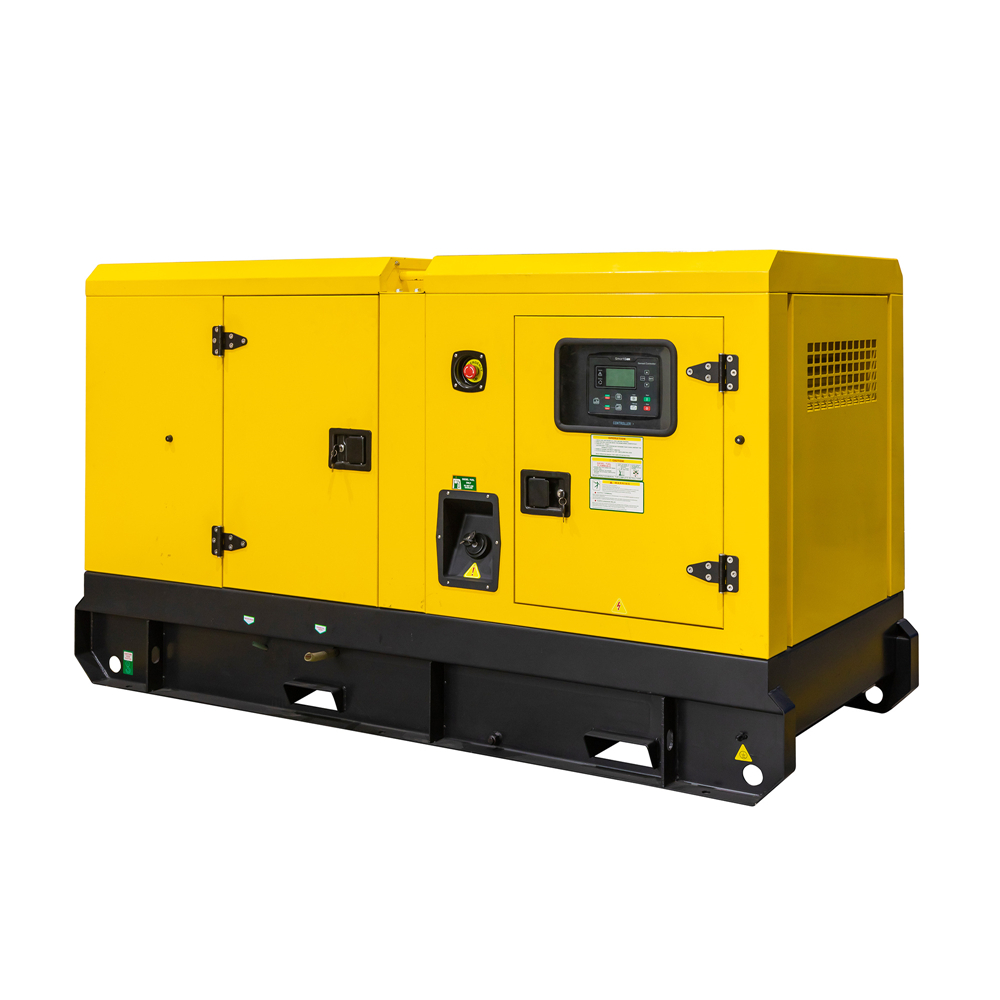
Environmental compliance dictates site viability in modern engineering projects. Acoustic management plays a massive role in secure permitting. This specific type of silent generator utilizes advanced noise suppression technology. Fire-retardant sound-absorbing panels line the internal walls. Custom-designed internal baffles disrupt sound waves before they exit the louvers. These integrated features reduce operational noise significantly. An open engine generates a deafening 80–100 dB. The enclosure suppresses this down to a compliant 65–75 dB at 7 meters. This suppression keeps your site compliant with stringent urban boundary limits.
Spill containment represents another critical environmental factor. The industry refers to this as bank protection. Heavy industrial sites cannot risk fluid leaks. Built-in bunded fuel tanks feature a double-wall construction. Leak-proof floor basins sit below the engine block. These internal traps catch any accidental leakage. Whether lubricating oil, radiator coolant, or raw diesel spills, the internal basin holds it safely. It prevents catastrophic soil contamination and protects your project from severe regulatory fines.
Smart energy management improves efficiency and addresses emission standards.
Continuous Monitoring: Integrated PLC controllers monitor site power demand in real time.
Dynamic Load Optimization: The system optimizes engine RPM and load balancing.
Reduced Fuel Burn: It actively reduces fuel consumption during variable demand periods.
Lower Emissions: Optimized combustion directly translates to fewer unburned hydrocarbons and lower particulate emissions.
We must analyze practical realities in the field. Maintaining an outdoor generator set during heavy rain or snow challenges any technician. Standard canopies force mechanics to stand outside. They must reach inside cramped access doors while fighting the weather. The walk-in advantage changes this completely. Generous internal clearance allows technicians to step fully inside the housing. They can perform scheduled servicing safely and comfortably. Weather no longer forces maintenance teams to skip crucial inspections.
Procurement teams should demand specific hardware details. Look for these safety-focused features in a highly specified enclosed genset:
Internal LED lighting for clear visibility during night operations.
External operational beacon lights to warn local personnel of automatic startup.
Color-coded wiring looms to prevent fatal technician routing errors.
Panic-release doors to ensure personnel can escape instantly.
Internal and external emergency stop (E-stop) buttons for immediate shutdown.
Secure climbing ladders for safe roof access and exhaust inspection.
Physical security matters deeply in remote locations. Vandalism and fuel theft plague isolated mining camps and telecommunication towers. Robust container locking mechanisms protect your internal assets. Heavy steel doors and recessed padlocks deter unauthorized access effectively. This physical barrier ensures your prime power source remains untouched until you need it.
Modern mega-projects move beyond basic emergency backup power. We must shift our focus toward comprehensive load management. An isolated diesel engine only solves part of the power continuity puzzle. It takes several seconds for a mechanical engine to start and reach synchronous speed. Critical infrastructure cannot survive this delay.
The UPS pairing creates a truly robust system. Engineers can design container enclosures to house Uninterruptible Power Supply (UPS) modules internally. Alternatively, they can seamlessly connect the generator externally to a dedicated UPS container. The UPS holds the site load using heavy-duty battery banks or kinetic flywheels. It carries the facility while the diesel engine cranks, starts, and stabilizes.
This combined approach creates zero-interruption micro-grids. It bridges the critical millisecond gap during a sudden grid failure. Facilities no longer suffer through destructive brownouts or data-corrupting glitches. It provides continuous, load-shedding capable power. Data centers, regional hospitals, and deep-shaft mining operations rely heavily on this seamless transition. The containerized structure houses this complex synchronization equipment safely away from environmental threats.
Buying a robust power enclosure represents an investment in infrastructure rather than just equipment. Your project may require rapid deployment to a remote site. It might demand zero environmental liability regarding noise and fuel spills. You might also expect multi-decade durability from your assets. If so, the containerized route is mathematically and operationally justified. It outlasts temporary canopies and eliminates the need for permanent buildings.
Take specific next steps today to secure your power continuity. First, audit your site’s physical footprint to ensure adequate hardstand space. Second, calculate your exact prime and standby kVA requirements. Finally, request comprehensive vendor documentation. You should always verify valid CSC certifications and certified acoustic testing data before initiating an official Request for Proposal (RFP).
A: Because they conform to exact ISO dimensions and feature valid CSC plates, they can be shipped via standard commercial container vessels and trucks. They avoid costly "out-of-gauge" or special project freight tariffs entirely.
A: While highly water-resistant and treated with industrial anti-corrosion coatings like galvanized steel and marine-grade paint, routine inspection is required. You must check door seals and ventilation louvers regularly to maintain complete weatherproofing over decades.
A: Open sets regularly exceed 90-100 dB, which sounds similar to a heavy jackhammer. A well-engineered container utilizes thick acoustic insulation and custom airflow routing. This suppresses noise to 65-75 dB, which compares to heavy city traffic and complies with urban limits.