T: +86-139-5050-9685
E: sales@bycpower.com
E: sales@bycpower.com
No. 13, Jincheng road, Tiehu village, Chengyang town, Fuan city, Fujian, China


Views: 0 Author: Site Editor Publish Time: 2026-05-31 Origin: Site


Procuring an industrial generator set represents a massive capital commitment lasting ten to fifteen years. A mismatched power system inevitably causes catastrophic facility downtime. You also drain operational budgets rapidly through wasted fuel and excessive maintenance cycles. Facility managers must move past the oversimplified narrative of choosing a basic winner. Both Cummins and Perkins represent the global pinnacle of power generation. They simply solve entirely different engineering and operational challenges on the ground.
Our comprehensive guide equips you with a hard-data, skeptical-friendly evaluation. We dive deeply into load acceptance, structural durability, and long-term maintenance realities. You will discover exactly how each engine architecture behaves under severe real-world stress. Procurement and engineering teams can finally stop relying on generic brand brochures. Instead, you will use these evidence-based metrics to select the exact machinery your specific operation demands.
The 200kVA Watershed: Perkins generally offers better initial ROI and fuel economy below 200kVA; Cummins dominates the heavy-duty, 7x24 continuous operation space above 200kVA.
Engineering Philosophies: Cummins focuses on "high-strength integration" (25% fewer components to reduce leak points); Perkins prioritizes "precision and stability" (highly optimized combustion and filtration for extreme environments).
Lifetime Costs: While Cummins provides advanced AI-driven diagnostics, Perkins can offer up to a 13% lower overall maintenance cost over a 100,000-hour lifecycle due to 75% parts interchangeability.
A generator's underlying design DNA always dictates its real-world failure points. Foundational differences shape how engineers build these distinct engines. We must break down these opposing approaches to understand lifecycle reliability.
Cummins engineers strictly adhere to high-strength integration principles. They utilize single-piece steel pistons paired alongside high-strength cast iron engine blocks. This unified approach reduces the overall engine part count by roughly 25 percent. Statistically, removing components lowers the probability of fluid leaks over time. It also prevents mechanical decoupling under intense operational vibration.
Furthermore, a typical Cummins generator features the advanced XPI ultra-high-pressure injection system. This aggressive fuel delivery system pushes up to 2400 bar of pressure. Facility operators achieve unassisted cold starts in brutal -15°C environments. You eliminate the need for fragile auxiliary block heaters in moderate winter climates.
Perkins engineers prioritize absolute precision, stability, and mechanical simplicity. They focus heavily on optimized combustion chamber geometry. They pair these efficient chambers alongside highly reliable EGR and SCR emission systems. You receive an engine built explicitly for severe dust and airborne debris.
Perkins specifies heavy-duty standard air filters boasting ratings up to 800 hours. This capability significantly outlasts standard industry averages. Additionally, a Perkins generator features a straightforward, highly accessible layout. Local mechanics can easily access belts, filters, and injectors. They rarely need proprietary digital tools to handle routine mechanical servicing. This simplicity ensures uptime in remote locations.
Procurement teams must cleanly separate capital expenditure from ongoing operating expenditure. Your specific power requirement heavily dictates these financial metrics. We observe a distinct behavioral split occurring right at the 200kVA threshold.
Perkins holds a distinct advantage regarding initial purchase price in this segment. Engineers optimize these smaller engine blocks perfectly for moderate use. You often observe 5-10% better fuel efficiency during normal operation. This efficiency applies primarily under standard, steady-state facility loads. Commercial offices and light manufacturing plants benefit immensely from this specific operational profile.
Cummins usually requires a noticeably higher initial capital investment. However, they offset this expense rapidly through robust engineering. You gain exceptionally long maintenance intervals. Extended oil change cycles directly reduce scheduled facility downtime.
Cummins achieves superior fuel economy at absolute peak capacity. Limit loads activate their High-Pressure Common Rail (HPCR) technology. Variable Geometry Turbocharging (VGT) also engages fully. This precise air-fuel management maximizes combustion efficiency under heavy industrial stress.
Perkins engines share incredibly high spare parts commonality. Up to 75% of components interchange seamlessly across various engine series. This widespread availability drives down routine aftermarket repair costs. Historical tracking shows a potential 13% lifecycle maintenance advantage over a 100,000-hour continuous run. Facilities relying on tight annual upkeep budgets favor this interchangeability.
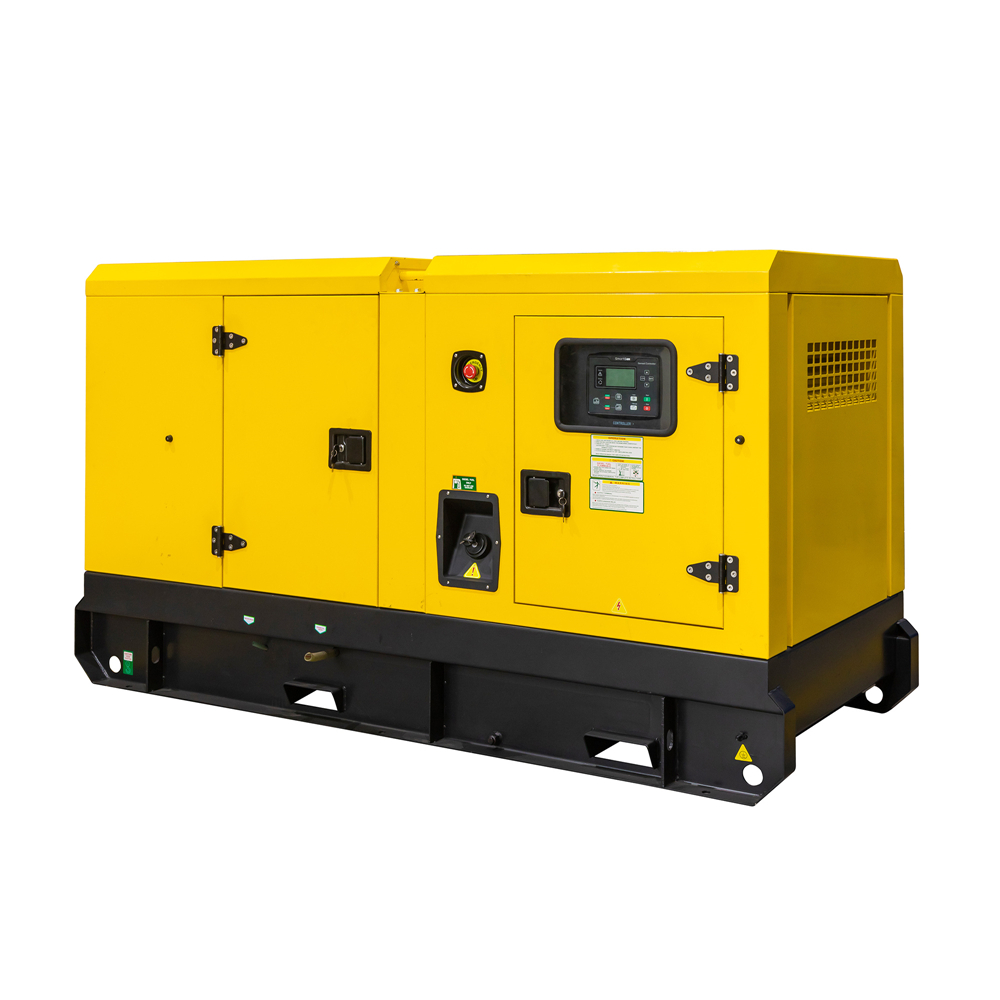
We must move away from generic marketing claims. Let us compare two specific, widely adopted 500kVA models running at 1500 RPM. This strict evaluation grounds our generator engine brand comparison in verifiable engineering reality.
We match the Cummins QSX15-G8 directly against the Perkins 2506A-E15TAG2.
Specification Metric | Cummins QSX15-G8 | Perkins 2506A-E15TAG2 |
|---|---|---|
Fuel Consumption (100% Load) | ~13.5 gal/hr | ~14.5 gal/hr |
Emissions Standard | EPA Tier 4 Final | EPA Tier 3 |
Dry Weight | 7,500 lbs | 6,500 lbs |
Ideal Application | Heavy prime power generation | Compact commercial retrofits |
The Cummins unit burns roughly 13.5 gallons per hour under full stress. It rigorously meets modern EPA Tier 4 Final environmental standards. The Perkins unit consumes slightly more, hitting about 14.5 gallons per hour. It operates safely at a Tier 3 compliance level. The advanced aftertreatment system inside the Cummins model recovers that extra fuel efficiency.
Notice the extreme mass difference. The Cummins unit weighs 7,500 lbs and occupies more physical space. Perkins weighs only 6,500 lbs, making it smaller. Perkins easily wins tight commercial building retrofits.
However, we must flip this apparent Cummins disadvantage. The extra structural mass acts as a natural vibration dampener. This heavy foundation lowers internal structural fatigue over decades of use. It also provides a much larger physical envelope. Engineers can easily mount high-capacity cooling systems onto the larger frame.
Procurement teams need a highly practical shortlisting checklist. Evaluate your distinct options based entirely on facility operational realities. Use these four critical pillars.
Load Profile & Fluctuation: Choose Cummins for environments enduring sudden, massive load steps. Mining crushers and enterprise data centers demand high instantaneous torque output. Choose Perkins for smooth, consistent base-load power. They excel when loads remain relatively stable.
Acoustic & Environmental Constraints: Hospitality sectors and healthcare facilities demand extremely low noise profiles. If you are specifying a silent diesel generator for strict residential zones, prioritize Perkins. They historically offer a quieter baseline mechanical operation before you even apply acoustic enclosures.
Digital Control & Monitoring: Modern smart grids require deep software integration. Opt for Cummins if your facility demands remote AI-enhanced monitoring. Their proprietary PowerCommand ecosystem remains largely unmatched. Perkins serves decentralized sites perfectly instead. They provide robust, simple mechanical reliability avoiding unnecessary software bloat.
Parts Availability & Support: Always evaluate local authorized service networks. Cummins offers a sprawling 190-country digital diagnostic network. Technicians plug in and diagnose fault codes instantly. Conversely, Perkins relies upon the massive, proven Caterpillar global supply chain. Physical replacement parts arrive quickly nearly anywhere on earth.
If you still struggle with a specific Cummins diesel generator vs Perkins diesel generator evaluation, revisit these four pillars. Map your facility blueprint against them rigorously.
Regulatory compliance tightens globally every single year. Sourcing teams must mitigate long-term environmental risk proactively. Both manufacturers approach clean energy transition differently.
Cummins aggressively expands into natural gas technologies. They also pioneer advanced hybrid power solutions. This forward-looking strategy makes them a significantly safer bet for heavily regulated urban facilities. If you anticipate strict future emission caps, plan accordingly. Their engineering pipeline focuses heavily on scalable alternative combustion.
Perkins remains deeply committed to pure diesel optimization. They refine existing combustion dynamics constantly rather than pivoting entirely. This dedicated focus provides maximum reliability for remote, off-grid operations. If your site completely lacks alternative fuel infrastructure, their pure diesel efficiency remains unmatched. They ensure you squeeze maximum energy from every drop of conventional fuel.
Making the final procurement decision requires balancing physical constraints against long-term operational goals. We recommend summarizing your shortlisting logic using these verified engineering principles.
Buy Perkins for budget-conscious, highly reliable commercial standby power. Choose them when quiet operation and easy maintenance remain paramount.
Invest in Cummins for heavy-duty, prime-power industrial applications. Select them when advanced digital diagnostics and extreme load acceptance easily justify the price premium.
Never purchase expensive industrial machinery based on nameplate capacity alone. Consult directly with an experienced application engineer first. Conduct a thorough facility load-step analysis. Calculate a complete 10-year projected fuel and maintenance curve before requesting a formal quote. This rigorous approach guarantees zero wasted capital.
A: It depends entirely on the applied load. Perkins typically saves 5-10% fuel at standard, steady loads. They optimize mid-range combustion beautifully. Conversely, Cummins proves more efficient when pushed to maximum capacity limits. They leverage advanced turbocharging to maintain efficiency under heavy mechanical stress.
A: Cummins prime models easily run 10 to 15 years before requiring a major overhaul. They achieve a B10 life over 500,000 km equivalent. The Perkins 2000 series boasts an incredible 82% survival rate past the 20-year mark in typical standby scenarios.
A: Generally, yes. Perkins shares up to 75% parts commonality across certain engine families. This massive interchangeability ensures high aftermarket availability. Local suppliers stock these components easily. This broad availability naturally drives down routine maintenance expenses over the equipment's lifecycle.
A: Cummins leads this specific category definitively. Their proprietary systems offer superior remote diagnostics immediately out-of-the-box. Facility managers gain interactive power management tools. They also benefit from AI-driven predictive maintenance capabilities. This digital ecosystem integrates seamlessly into modern smart grid infrastructures.