T: +86-139-5050-9685
E: sales@bycpower.com
E: sales@bycpower.com
No. 13, Jincheng road, Tiehu village, Chengyang town, Fuan city, Fujian, China


Views: 0 Author: Site Editor Publish Time: 2026-07-02 Origin: Site


Purchasing a mobile power unit requires evaluating two very different mechanical systems. You are inspecting a heavy-duty electrical power plant. You are also evaluating a road-worthy vehicle simultaneously. Failing to assess either aspect carefully often leads to frustrating operational downtime. It can also trigger serious regulatory compliance issues during transport. For procurement managers and site operators, this decision goes far beyond checking simple kilowatt (kW) ratings. You must scrutinize towing stability before making a final choice. You also need to verify environmental durability under extreme weather conditions. Evaluating engine performance under variable electrical loads is absolutely essential. This guide offers an expert-level evaluation framework. We will help you systematically vet these complex units. You will learn how to identify robust internal components. We highlight common procurement mistakes so you can avoid them entirely. By following these specific steps, you ensure highly reliable deployment in the field.
Every successful equipment deployment begins by defining strict operational boundaries. You must accurately map out your anticipated power requirements. You also need to assess environmental limitations at the destination. Evaluating these factors prevents severe equipment damage over time.
Buyers must differentiate between prime, continuous, and standby power ratings. Prime power allows variable load applications for unlimited hours. Continuous power delivers constant output without any load variation. Standby power runs only during emergency utility outages. Identifying your starting motor loads remains critical for success. Large induction motors require massive surge capacity during startup. You must separate these transient surge requirements from normal running loads. Undersizing leads to tripped breakers and stalled projects. Oversizing creates harmful wet stacking inside the combustion chambers. A properly sized trailer type diesel generator matches your peak demands efficiently.
Evaluate the onboard fuel capacity rigorously before committing to a unit. You must cross-reference the base tank size against your required runtime. Calculate this autonomy at both 75% and 100% load capacities. You do not want unexpected engine shutdowns during peak construction hours. Always specify dual-wall base tanks for your equipment. These specialized tanks meet strict environmental spill containment regulations. They prevent disastrous soil contamination if an internal rupture occurs.
Site conditions directly impact maximum power output. You must define the exact altitude of your deployment location. Temperature extremes also alter combustion efficiency significantly. High ambient dust levels demand heavy-duty air filtration systems. Engines lose horsepower at higher elevations due to thinner oxygen levels. This phenomenon requires precise engine derating calculations. You must apply these mathematical formulas to ensure consistent voltage output. High temperatures force cooling systems to work harder. You may require oversized radiators for desert deployments.
| Power Rating Type | Load Variability | Annual Run Hours | Primary Application |
|---|---|---|---|
| Standby Power | Variable | Under 200 hours | Emergency grid backup |
| Prime Power | Variable | Unlimited | Rental fleets, remote job sites |
| Continuous Power | Constant (100%) | Unlimited | Base load power stations |
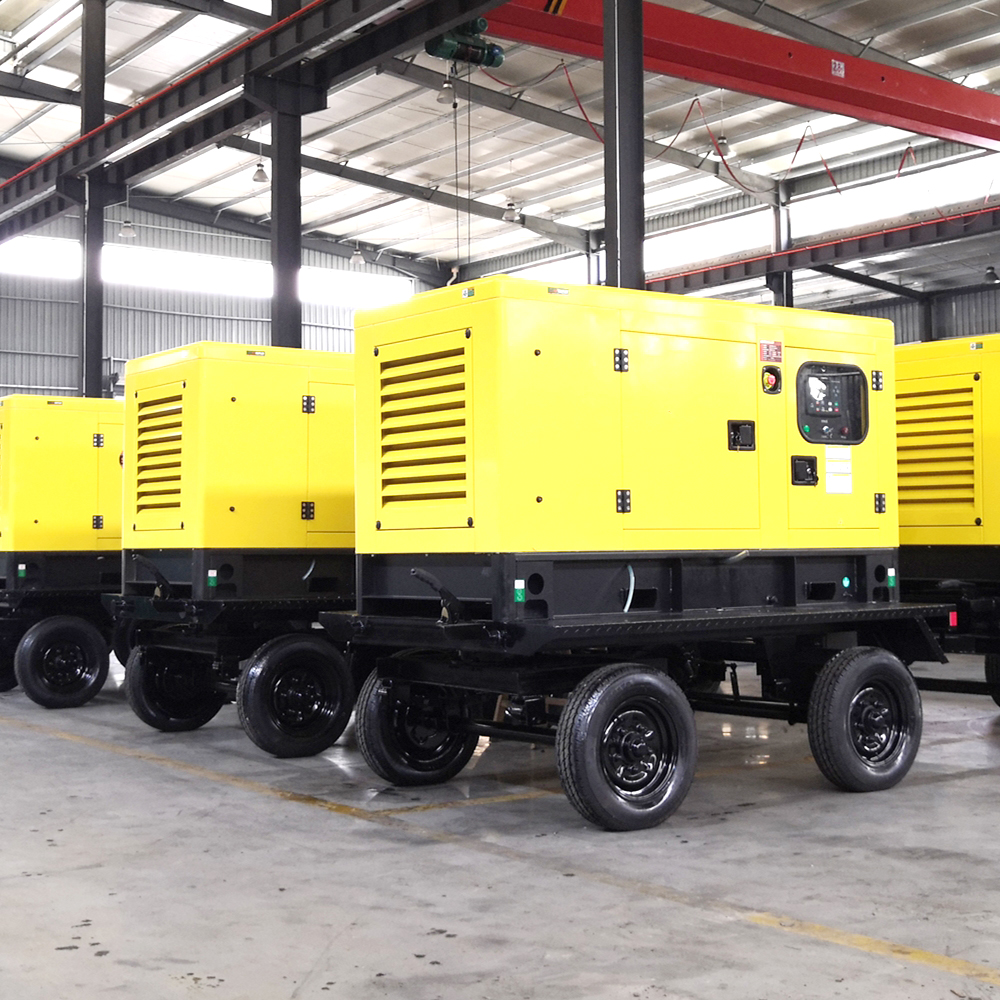
The transport mechanism deserves equal scrutiny during your evaluation. You are towing thousands of pounds of heavy vibrating machinery. The chassis must endure massive dynamic stresses on rough roads.
Examine the total wet weight carefully during your calculations. This metric includes a completely full tank of fuel, oil, and coolant. You must choose single, tandem, or triple axles based on this wet weight. Torsion suspensions provide superior vibration isolation for heavy machinery. They outperform standard leaf springs significantly on uneven terrain. Torsion setups prevent chassis warping on rugged construction sites. They allow independent wheel movement over deep potholes. This independent travel protects sensitive engine mounts from cracking.
Your chosen portable generator trailer must achieve strict highway compliance. You should check for specific DOT certifications or regional equivalents. Evaluate the front hitch type thoroughly. Heavy multimegawatt units require rugged forged pintle rings. Smaller models might utilize standard heavy-duty ball hitches. Always inspect the safety chains for appropriate steel grade ratings. You also need reliable braking mechanisms installed. Surge brakes work reasonably well for medium equipment weights. Electric brakes offer vastly superior control for massive highway hauls.
Common highway compliance checks include:
Uneven terrain threatens internal engine health directly. Parking your unit on a steep slope causes oil to pool unevenly. This triggers catastrophic oil starvation inside the upper cylinders. You must ensure the trailer generator set features drop-leg leveling jacks. These heavy-duty structural supports maintain perfect horizontal stability. They keep the entire chassis rigid during aggressive electrical load steps. Proper leveling also ensures accurate fuel gauge readings.
The internal machinery dictates the overall reliability of the unit. You need robust components to generate perfectly clean power. Sensitive site electronics depend entirely on stable electrical frequencies.
Evaluate the underlying engine brand very carefully. You want a trusted manufacturer offering deep local parts availability. An obscure engine brand causes massive repair delays during critical projects. You must also verify the tier emissions rating precisely. Many urban regions require strict EPA Tier 4 Final compliance. You face hefty environmental fines if emissions exceed local limits. Tier 4 engines utilize advanced aftertreatment systems. You must familiarize your team with Diesel Exhaust Fluid (DEF) requirements.
The alternator converts mechanical rotation into usable electricity. You should look for Class H insulation on the spec sheet. This specialized thermal wrapping withstands extreme internal temperatures. It protects the copper windings from melting under heavy stress. You also need a 2/3 pitch design in the alternator. This specific coil arrangement handles non-linear loads gracefully. It minimizes harmful harmonic distortion inside the electrical wave. Clean sine waves protect delicate computers and telecom gear from failure.
Modern equipment requires highly intelligent oversight. The mobile diesel generator needs a weather-sealed digital controller. Operators should easily navigate the screen interface while wearing work gloves. Advanced telematic systems offer incredible daily value.
Telematics eliminate the need for manual site visits. You manage your fleet entirely from a remote dashboard.
Never accept verbal promises regarding equipment capabilities. You must demand hard empirical evidence from the supplier. Documentation separates reliable vendors from questionable sellers.
Insist on reviewing recent load bank test results. This step applies especially when evaluating used inventory. The load bank simulates real-world electrical demands accurately. It forces the machine to run at absolute peak capacity. This remains the only proven way to verify true power output. It confirms the cooling system handles extreme heat generation without failing. A proper test runs for several hours continuously. It records voltage drops and frequency dips systematically.
Urban deployments require strict noise control measures. You must verify the acoustic certification independently. Check the decibel (dB(A)) rating measured at exactly 7 meters (23 feet). An outdoor power generator needs a highly engineered sound enclosure. Inspect the interior metal walls closely. They should feature high-density, fire-retardant acoustic foam. The exhaust silencers must redirect sound waves effectively. Hospital zones and residential neighborhoods enforce strict noise ordinances.
Always clarify the exact warranty boundaries before signing. Understand the specific split between parts coverage and labor rates. Find out if the manufacturer covers technician travel time to your site. Used equipment demands even deeper physical scrutiny. You must insist on comprehensive fluid analysis reports. Testing the oil and coolant reveals hidden internal bearing wear. Verifiable service records show how well previous owners treated the machine.
| Document Type | What It Proves | Why You Need It |
|---|---|---|
| Load Bank Report | Empirical performance under 100% stress | Validates cooling and alternator health |
| Acoustic Certificate | Verified dB(A) sound output at 7 meters | Ensures compliance with urban noise laws |
| Fluid Analysis | Microscopic metal shavings in oil | Detects premature engine wear in used units |
Buyers often fall into predictable evaluation traps. Avoiding these errors saves thousands of dollars in hidden costs. We highlight the most critical missteps below.
Many buyers calculate towing limits using the dry specification weight. This represents a massive safety hazard. A 100-gallon diesel tank adds roughly 700 pounds instantly. Engine coolant and heavy-duty oil add another 100 pounds. You create an illegal towing configuration once you fill the fluid reservoirs. This causes dangerous highway sway and potential braking failures. Always base your truck pairing calculations on the absolute maximum wet weight. Protect your drivers and your liability.
Routine maintenance keeps your power running smoothly. However, poorly designed enclosures block critical service points. Technicians struggle to reach oil drains or hidden fuel filters. This frustrating layout increases routine labor costs drastically. It also encourages skipped maintenance intervals due to sheer inconvenience. You must verify easy access through large, lockable enclosure doors. Look for externally mounted fluid drain valves. They speed up servicing significantly.
Job sites require vastly different electrical configurations. Purchasing a single-voltage unit severely limits your operational versatility. You might need 480V three-phase power today for heavy pumps. Tomorrow, a different site might need 240V single-phase power for lighting. We strongly recommend choosing a temporary power generator equipped with a multi-voltage selector switch. This allows seamless transitions between diverse rental jobs. It maximizes the utilization rate of your asset.
Procuring dependable mobile power demands rigorous technical vetting. You must evaluate the trailer chassis just as thoroughly as the diesel engine. Narrow down your vendor list using strict shortlisting logic. Demand comprehensive specification sheets upfront. Require verified load test data before making any financial commitments. You should also demand a completely transparent warranty breakdown.
Your next step involves direct physical inspection. Examine the chassis welds for deep structural integrity. Check the enclosure seals for proper weatherproofing. Boot up the digital control panel to test its screen responsiveness. We recommend doing this via live-video if you cannot travel. Prioritize vendors demonstrating deep engineering expertise. Look for authoritative test records and highly trustworthy communication. Following this framework guarantees you acquire a highly capable asset for your fleet.
A: Standby units are permanently installed and hardwired to a specific facility. They activate automatically during grid failures. Trailer types are designed for rapid mobility. They feature reinforced chassis frameworks, DOT-approved towing gear, and onboard fuel tanks. Mobile units also offer multi-voltage capabilities to adapt to varied site deployments.
A: Wet stacking occurs when a generator runs constantly on a light load. This prevents the engine from reaching its optimal operating temperature, allowing unburned fuel to accumulate in the exhaust. Prevent this by properly sizing the unit initially. You should also periodically run it under a load bank at 75% capacity to burn off deposits.
A: It depends heavily on the total Gross Combined Weight Rating (GCWR). You must calculate the weight of the towing vehicle plus the fully fueled generator trailer. Smaller units often fall under standard license limits. However, larger multimegawatt units frequently exceed these thresholds. Always verify local transportation regulations before towing.