T: +86-139-5050-9685
E: sales@bycpower.com
E: sales@bycpower.com
No. 13, Jincheng road, Tiehu village, Chengyang town, Fuan city, Fujian, China


Views: 0 Author: Site Editor Publish Time: 2026-06-25 Origin: Site


In remote mining, power failure isn't just a minor inconvenience. It halts dewatering pumps immediately. It stops production cold, creating massive hourly downtime losses. Off-grid mining operates in brutally unforgiving realities. High dust levels choke standard engines quickly. Extreme temperature fluctuations push equipment to the breaking point. Furthermore, maintenance teams face extremely difficult access over unpaved, treacherous routes.
Standard open or light-canopy generators simply fail under these harsh conditions. Standardizing on a heavy-duty container type generator forms the industry baseline for continuous off-grid energy. You will learn how to size your load correctly for optimal performance. We will explore the necessary weatherproof features required for survival. Finally, you will discover how to evaluate fuel and maintenance needs to keep your operations running flawlessly.
Remote mining operations face immense logistical hurdles daily. Transporting heavy equipment over unpaved, deeply rutted roads subjects machinery to violent vibrations. Lifting massive gear without established crane infrastructure poses severe safety risks. Machinery faces severe elements immediately upon arrival. A standard sheet-metal canopy will warp, crack, or leak under this physical stress. You need structural integrity designed specifically for global shipping and extreme industrial abuse.
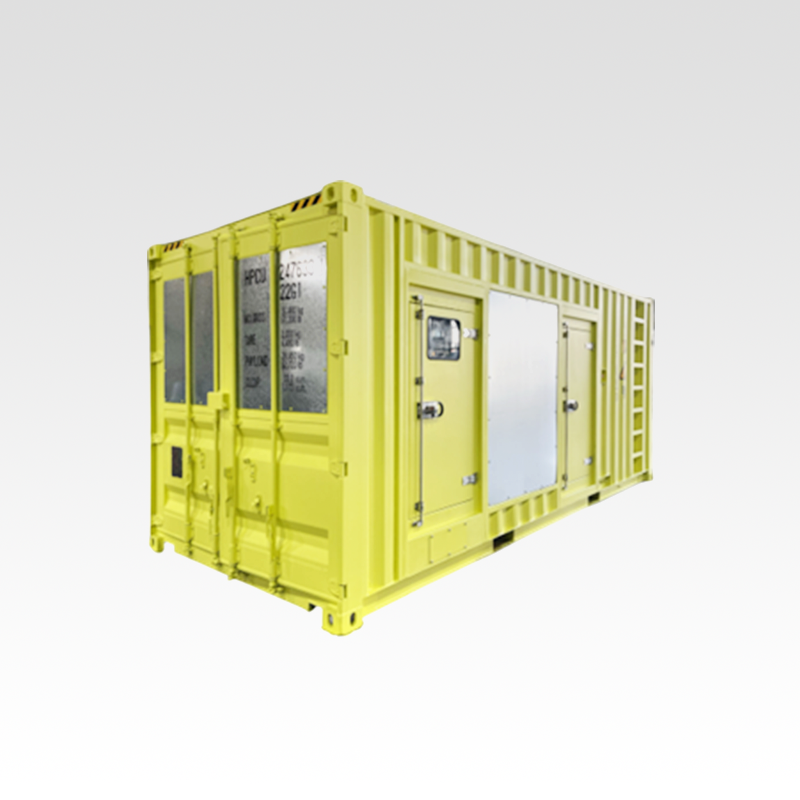
Corrugated steel ISO shipping containers provide massive structural advantages over standard enclosures. They handle immense physical stress naturally. Remote site power deployment relies heavily on these standardized formats for easy movement. Consider the logistical benefits:
Security remains a critical concern for unmanned operations. Isolated mines face high risks of fuel theft and equipment tampering. Containerized units feature heavy-duty, lockable, reinforced steel doors. They hide internal fuel tanks and control panels behind thick corrugated walls. This drastically reduces unauthorized access and protects your critical energy infrastructure.
Mining applications demand relentless energy. You must understand the critical distinction between duty cycles before selecting equipment. Standby power is designed strictly for emergency outages. It operates for a limited number of hours annually. Mining requires Prime Power or Continuous Power ratings. Prime power allows unlimited running hours at a variable load. Continuous power supports unlimited hours at a constant 100% load. Never base your mining equipment decisions on standby ratings. Doing so will overheat the alternator and destroy the engine.
Industry professionals frequently rely on the 600kW container generator as a benchmark module. Housed perfectly inside a standard 20ft container, it offers incredible versatility. It serves as an ideal building block for powering worker camps, rock crushers, or even remote crypto-mining offshoots.
Scalability ensures operational survival. Instead of buying one massive 1800kW generator, engineers utilize paralleling strategies. They synchronize three 600kW units together. This risk-mitigation strategy prevents total site blackouts. If one unit requires an oil change or suffers a sudden fault, the other two continue running. You maintain critical loads seamlessly.
| Rating Category | Operating Hours Limit | Average Load Factor Allowed | Application Fit for Mining |
|---|---|---|---|
| Standby | Max 200-500 hours/year | 70% of standby rating | Poor. Fails under constant use. |
| Prime | Unlimited | 70% of prime rating over 250 hours | Excellent for variable camp loads. |
| Continuous | Unlimited | 100% constant load | Required for constant pumping/crushing. |
Ambient temperatures in desert mines often exceed 40°C to 50°C. Extreme heat causes severe engine power derating. Air density drops significantly as heat rises. The engine simply cannot pull enough oxygen to burn fuel efficiently. Standard radiators boil over quickly. You must advise your supplier to install specific 50°C ambient cooling packages. These packages include oversized radiators and high-flow cooling fans to keep the core temperature stable.
Dust and fine sand act like grinding paste inside engine cylinders. They destroy components rapidly. A reliable weatherproof generator set requires advanced air filtration. Standard paper filters clog within hours. You need heavy-duty, two-stage or cyclonic air filtration systems. The container itself should feature motorized louvers. When the machine shuts down, the louvers close tightly. Sand traps mounted on the air intakes prevent coarse particles from entering the enclosure and damaging the sensitive alternator windings.
Corrosion eats away unpainted steel quickly. Specify marine-grade paint coatings meeting C4 or C5 ISO standards. Ensure all control panels and alternators meet strict IP (Ingress Protection) ratings. Minimum IP23 for the alternator is standard, but IP44 offers superior protection against horizontal wind-blown rain and heavy dust storms.
Fuel costs and transport logistics completely dwarf the capital cost of the equipment. Delivering fuel to a remote site requires specialized trucks traversing dangerous roads. You must evaluate fuel consumption curves deeply. Do not look at single data points. Analyze liters per hour at 50%, 75%, and 100% load. A highly efficient engine saves thousands of liters annually.
Standard oil change intervals hover around 250 to 500 hours. In continuous mining operations, 250 hours means changing oil every ten days. This creates an impossible maintenance burden. Select a container diesel generator equipped with a large-capacity oil pan. Incorporate dual fuel and oil filtration systems. These upgrades push service intervals to 1,000 hours or more. Extended intervals keep your maintenance crew focused on production equipment rather than generator servicing.
Internal fuel storage determines your refueling frequency. Evaluate integrated double-wall day tanks built into the heavy steel floor base. A 20ft container easily accommodates a 500L to 1000L internal tank. Compare this capacity against your daily burn rate. For larger operations, you will need external bulk fuel storage connections. Ensure the container includes automated fuel transfer pumps to pull diesel safely from the external bulk tanks.
Chart: Estimated Hourly Fuel Consumption Impact
| Load Percentage | Engine Efficiency Behavior | Operational Impact on Site |
|---|---|---|
| 50% Load | Low efficiency. Risk of "wet stacking" (unburnt fuel in exhaust). | Requires periodic dummy load banks to clean carbon buildup. |
| 75% Load | Optimal fuel burn rate for most prime engines. | Maximizes engine lifespan and stretches refueling intervals. |
| 100% Load | Maximum power output, highest fuel draw. | Reduces component longevity if maintained continuously for weeks. |
Component transparency separates professional suppliers from unreliable assemblers. Look past the brand name printed on the exterior canopy. Demand exact technical specifications regarding the internal components. High-end operations rely on proven engines from Cummins or Perkins. They specify alternators from Stamford or Leroy-Somer. The control system serves as the brain of your power plant. Insist on universally recognized controllers from Deep Sea Electronics (DSE) or ComAp. These premium components guarantee stability when synchronizing multiple units.
Never authorize shipment to a remote mine without a documented Factory Acceptance Test (FAT). The supplier must connect the unit to a load-bank at their factory. They must run it at full capacity and provide documented proof of performance. Shipping an untested industrial backup generator to a site located hundreds of miles from civilization is incredibly dangerous.
A premium machine becomes useless if a replacement filter takes six weeks to arrive. Evaluate the supplier's local distribution network thoroughly. Ask about spare parts availability in your specific region. You need immediate access to specialized sensors, voltage regulators, and heavy-duty filters.
Choosing containerized power for a mining operation is a massive infrastructure decision. It goes far beyond a simple equipment purchase. You are investing in site survival. Keep these actionable steps in mind:
A: The main difference lies in power capacity and internal space. A 20ft container usually caps around 1000kW to 1250kW, depending on the engine block size. A 40ft container easily handles 1500kW and above. The 40ft footprint also provides extra room for massive internal double-wall fuel tanks, custom switchgear, and walk-in maintenance access.
A: A modern 600kW engine typically consumes roughly 110 to 140 liters per hour when running at 75% to 100% load. This burn rate varies based on engine efficiency, ambient temperature, and exact kW output. Your actual fuel consumption depends heavily on effective site load management.
A: Yes, provided the unit carries a Continuous or Prime power rating. However, it cannot run indefinitely without stops. You must shut it down periodically for scheduled maintenance, such as oil and filter changes. To achieve true 24/7 uninterrupted power, you must integrate multiple units into a synchronized redundant system.
A: They can be temporarily placed on compacted, leveled earth or gravel skids due to their highly rigid ISO steel frame. However, a poured concrete pad is highly recommended for long-term prime power setups. Concrete prevents ground settling, minimizes vibration, and ensures proper fluid drainage during maintenance.