T: +86-139-5050-9685
E: sales@bycpower.com
E: sales@bycpower.com
No. 13, Jincheng road, Tiehu village, Chengyang town, Fuan city, Fujian, China


Views: 0 Author: Site Editor Publish Time: 2026-05-18 Origin: Site


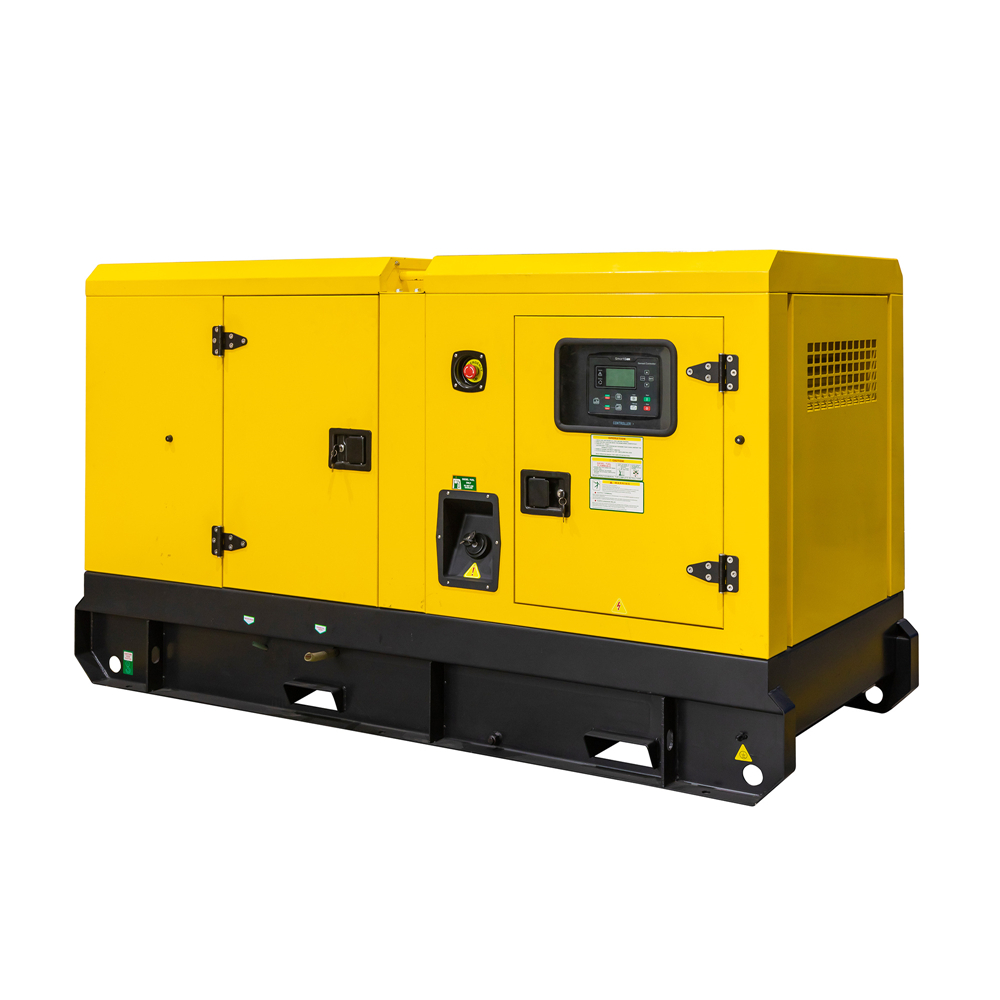
Choosing the right power source is a constant balancing act on job sites. Project managers must prevent workflow-halting outages while avoiding bloated fuel costs. You need reliable energy to keep operations moving forward. Unfortunately, a common industry misstep involves blindly oversizing equipment out of caution. This sizing mistake routinely leads to severe mechanical failures and wasted capital. Conversely, undersizing equipment triggers catastrophic downtime, tripped breakers, and damaged power tools.
We built this comprehensive guide to help project managers and contractors accurately calculate load demands. You will learn a pragmatic, compliance-aware framework to properly size a diesel generator for construction site applications. This systematic approach effectively mitigates both financial and mechanical risks for your upcoming builds.
Identify peak loads: Always calculate total running wattage plus the single largest starting (surge) wattage to determine baseline needs.
Convert correctly: Factor in the industry-standard 0.8 power factor when converting kW (active power) to kVA (apparent power).
Target the 70-80% sweet spot: Continuous operation below 50% capacity causes severe engine damage (wet stacking).
Account for site variables: Altitude, temperature, and phased equipment starts dictate final capacity requirements just as much as equipment nameplates.
Accurate power sizing begins with understanding equipment load profiles. You cannot rely solely on the continuous power rating. You must evaluate the sudden surges required to activate heavy machinery.
Electrical equipment demands two different types of power. "Running Watts" represent the continuous power needed to keep equipment operating normally. "Starting Watts" represent the brief, intense surge required to overcome initial inertia. Heavy motors and compressors demand massive starting surges. Industry data shows compressor and motor starting loads can reach up to six times their running wattage. Failing to account for this surge will instantly trip breakers.
Typical Construction Load Profile Examples | |||
Equipment Type | Average Running Watts | Estimated Starting Watts | Surge Multiplier |
|---|---|---|---|
Air Compressor (Large) | 2,000W | 8,000W - 12,000W | 4x - 6x |
Concrete Mixer | 1,500W | 4,500W | 3x |
Circular Saw | 1,200W | 2,400W | 2x |
Halogen Work Lights | 1,000W | 1,000W | 1x (No surge) |
We recommend a conservative calculation rule to simplify complex electrical estimates. First, add the total running watts of all concurrently operating equipment. Next, identify the single largest starting wattage requirement among your tools. Add this specific surge value to your running total. Finally, multiply this combined sum by a 1.25 safety factor.
This formula creates a 25% reserve capacity. This buffer protects your site against unexpected equipment additions later in the project. It handles minor fluctuations without causing excessive over-specification. You stay protected without wasting money on unused capacity.
You must understand the difference between actual power and apparent power. Kilowatts (kW) measure the actual power your tools consume. Kilovolt-Amperes (kVA) measure the apparent power the system must generate. Generators are universally rated in kVA.
The industry-standard conversion uses a 0.8 Power Factor (PF). The formula is straightforward: kVA = kW / 0.8. For example, if your equipment load calculation totals 100kW, you divide 100 by 0.8. You will need a minimum 125kVA generator to handle this load safely.
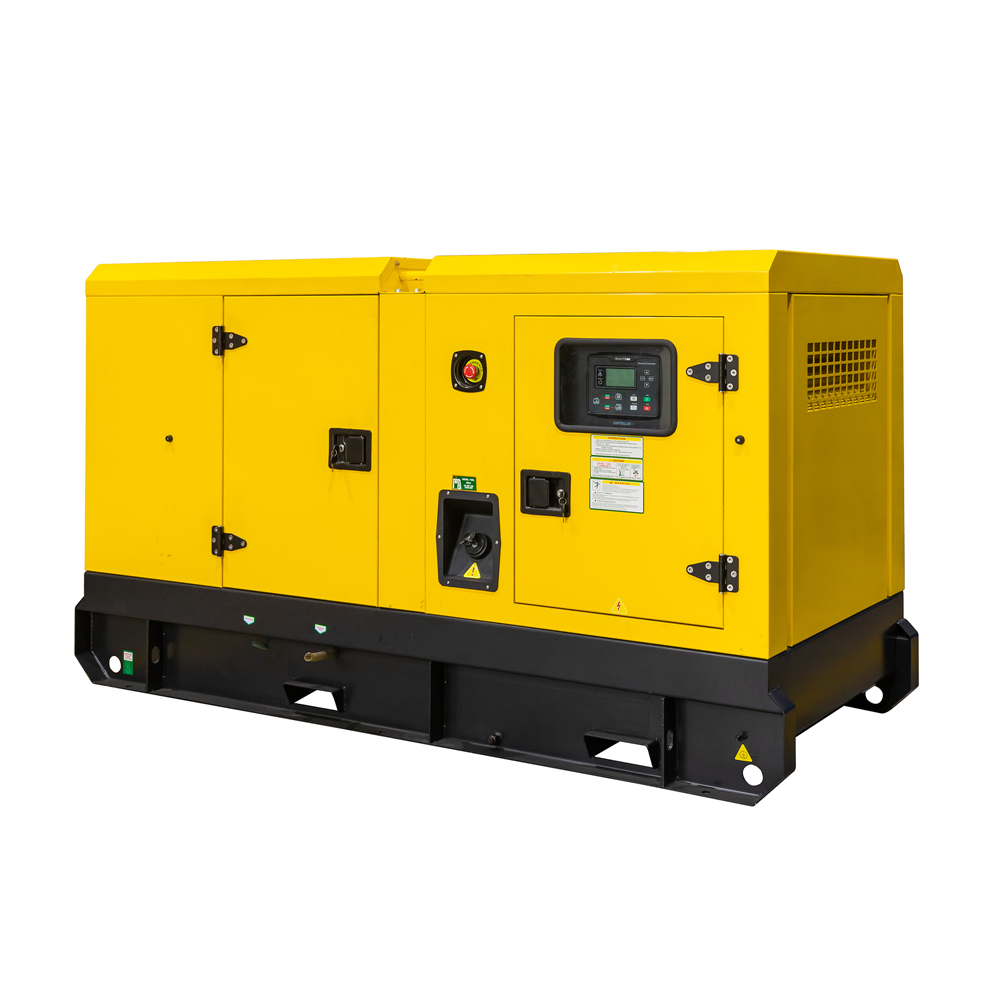
Contractors frequently order massive generators just to feel safe. This poor sizing logic introduces hidden operational risks. Oversizing harms engines and dramatically lowers fuel efficiency.
Running a construction diesel generator below 50% of its rated capacity creates a severe mechanical issue. The engine never reaches its optimal operating temperature. Unburned fuel and carbon begin building up inside the exhaust system. Mechanics call this phenomenon "wet stacking." It forms a thick, dark liquid dripping from the exhaust pipe. Wet stacking decreases efficiency, increases hazardous emissions, and eventually causes permanent engine damage. You should target a continuous 70-80% operational load to keep engines healthy.
Physical site conditions directly impact power output. Engines require oxygen to burn fuel and dense air to cool components. High altitudes feature thin air, which restricts oxygen intake. Extreme heat reduces air density and strains cooling systems.
Engineers must calculate a "derating" buffer for these extreme conditions. A unit rated for 100kVA at sea level might only produce 85kVA in the hot, high-altitude mountains. You must verify the manufacturer's derating chart. This ensures your site power generator maintains stable performance regardless of environmental extremes.
You should never size your power source for a scenario where every machine starts simultaneously. Simultaneous starts create an artificial, impossibly high surge requirement. This forces you to rent an unnecessarily massive machine.
Instead, implement a staggered start strategy. Power up heavy equipment sequentially. Look at the Locked Rotor (LR) ratings on equipment nameplates. The LR rating indicates the absolute maximum surge required during a stalled start. Sequence your highest LR equipment first. Allow it to settle into its running wattage before starting the next machine. This simple operational change safely allows the use of a smaller, highly efficient generator.
Power requirements vary wildly across different phases of construction. Contextualizing your specific needs prevents costly mismatches. Let us examine three common deployment scales.
Residential builds, independent contracting crews, and temporary security setups require high mobility. These sites typically operate hand tools, small air compressors, and site trailers. The logistics of moving a massive unit are prohibitive.
For these applications, a 12kw diesel generator is often sufficient. It easily powers concrete saws, basic lighting, and small welding tools. These smaller units fit on standard trailers and require minimal site prep. They keep fuel consumption low while maintaining dependable output for independent crews.
Commercial builds, mid-sized retail developments, and municipal projects involve multiple trades working simultaneously. You will see continuous operation of concrete mixers, small lifts, and heavy framing tools. These sites demand reliable three-phase power.
Contractors often choose a robust open diesel generator for these medium sites. Open units lack the heavy soundproofing enclosures of silent models. However, they provide exceptional cooling and easy maintenance access. They are highly viable for well-ventilated, secure outdoor sites where urban noise ordinances are less restrictive.
Multi-story developments and heavy infrastructure projects run massive equipment. Tower cranes, heavy welding arrays, and multi-story hoists demand tremendous peak power. Historically, managers would rent one massive 1500kVA unit to handle crane surges.
Today, we advocate for modern "Load-on-Demand" architectures. A single massive unit wastes vast amounts of fuel during quiet night shifts. Instead, contractors parallel multiple smaller units together. You might link three 500kVA units. The system automatically powers them up or down based on real-time site demand. This architecture provides redundancy, saves fuel, and eliminates wet stacking during low-load periods.
Finding the right kW number is only half the battle. You must evaluate the technical compatibility of the equipment. Several crucial factors separate a successful deployment from a frustrating failure.
Commercial construction relies heavily on three-phase power. It provides the stable, continuous energy required for heavy machinery. Single-phase units are generally restricted to light residential tools. You must verify the selected unit perfectly matches your site panel specifications. Supplying the wrong phase can instantly destroy expensive electric motors.
Heavy motor starts always cause momentary voltage drops across the network. Rugged mechanical tools tolerate these drops well. However, sensitive electronics do not. Modern sites feature server trailers, laser surveying tools, and automated security systems. These devices require clean power.
You must evaluate the machine's transient voltage dip tolerance. For sites running sensitive electronics alongside heavy motors, you must limit voltage drops to a maximum of 15%. Anything higher risks triggering system resets and damaging delicate components.
Tower cranes present the ultimate sizing challenge. They demand a massive startup spike but require very little running power. Sizing an engine purely for a crane surge guarantees severe wet stacking.
Modern engineering offers chemical and mechanical hybrid solutions. You can pair a standard engine with a smart battery hybrid system or a mechanical flywheel. These hybrid attachments absorb the massive startup spikes instantly. This "peak shaving" technique allows you to run a significantly smaller primary engine, dramatically reducing emissions and fuel expenses.
We developed this rapid, actionable checklist. Use it to transition smoothly into the procurement or rental phase without missing critical details.
Inventory equipment data: Walk the site and catalog all planned equipment. Locate the manufacturer nameplates to record exact Running Watts and Starting (or Locked Rotor) ratings.
Execute the formula: Calculate total concurrent kW. Add the single largest surge value. Apply the 1.25x safety margin. Finally, divide by 0.8 to convert your final number to kVA.
Assess site physics: Document your site altitude and average daily temperatures. Check your delivery paths for narrow access points that might restrict heavy truck or crane deliveries.
Verify electrical necessities: Confirm whether your heavy equipment requires single-phase or three-phase power. Determine your acceptable voltage drop limits based on sensitive site electronics.
Finalize the procurement model: Decide between renting a single large unit or deploying a smart Load-on-Demand parallel setup for better efficiency.
Following these specific steps prevents costly, last-minute equipment exchanges. You will approach vendors with exact technical requirements rather than rough guesses.
Accurate power sizing requires more than raw math. It serves as a fundamental exercise in risk management and operational efficiency. You must balance the threat of downtime against the slow, hidden costs of wet stacking and wasted fuel. Remember, aiming for a 70-80% operational load consistently yields maximum fuel efficiency and prolongs engine lifespan.
Do not guess when millions of dollars are on the line. We highly encourage project managers to consult with certified power technicians. You should use a professional load calculator to finalize your specific deployment figures before signing any rental or purchase agreement.
A: An undersized unit will continuously trip circuit breakers under load. It causes dangerous transient voltage drops across the electrical network. This "brownout" effect forces electric motors to pull more current, quickly overheating and permanently damaging your connected power tools.
A: They operate differently. Construction units provide continuous "prime power" for daily operations. A backup generator for buildings provides "standby power" for emergency outages. Permanent building installations must also meet strict local National Electrical Code (NEC) compliance, emissions, and permanent wiring standards.
A: Diesel fuel offers a significantly higher energy density, providing better long-term fuel efficiency under heavy loads. The engines lack spark plugs, which greatly reduces fire hazards in dusty environments. They are specifically built to handle constant, heavy-duty cycles better than gas alternatives.