T: +86-139-5050-9685
E: sales@bycpower.com
E: sales@bycpower.com
No. 13, Jincheng road, Tiehu village, Chengyang town, Fuan city, Fujian, China


Views: 0 Author: Site Editor Publish Time: 2026-05-20 Origin: Site


Every power project demands a critical choice at the procurement stage. You must weigh the raw cost-efficiency of an open frame against the compliance-friendly design of a silent canopy. Buyers often struggle to balance upfront savings against long-term site requirements. This choice extends far beyond the initial price tag. You must evaluate infrastructure constraints, weather exposure, and strict regulatory compliance. A wrong decision can lead to costly retrofits or sudden regulatory shutdowns.
This guide delivers an evidence-based comparison of acoustics, thermodynamics, and installation needs. You will explore lifecycle costs and real-world deployment scenarios. We will help you confidently short-list the exact equipment you need for your facility. You will learn how to align mechanical specifications with municipal zoning laws. We will break down why thermodynamics matter just as much as decibel ratings.
Noise Discrepancy: Open models operate at 90–110 dB (industrial limit), while silent models reduce output to 65–75 dB (conversational level).
TCO Reality: The 20–40% higher initial cost of a silent unit is frequently offset by eliminating the need to construct a dedicated, sound-treated generator room.
Cooling Dynamics: Professional silent canopies require advanced airflow engineering; aftermarket retrofitting of open frames often leads to overheating.
Application Scale: Selections scale predictably—from a portable power generator for a 10kva residential backup to multi-megawatt open units for remote mining.
These machines feature an exposed engine, alternator, and radiator. The factory mounts these components directly on a robust steel skid. They lack acoustic insulation entirely. They provide zero weather protection for internal electrical parts. You can deploy an open type diesel generator when noise restrictions do not apply. They thrive in indoor plant rooms equipped with pre-existing ventilation. These rooms must also feature heavy sound attenuation. They serve perfectly in remote, off-grid locations like mining camps.
Mechanics love them because they offer ultimate physical access. You can see every belt, hose, and wiring harness clearly. This visibility accelerates routine maintenance and emergency troubleshooting. However, this exposure demands a controlled environment. Dust, rain, and debris will destroy these units quickly if left outside. You must invest heavily in the surrounding room structure.
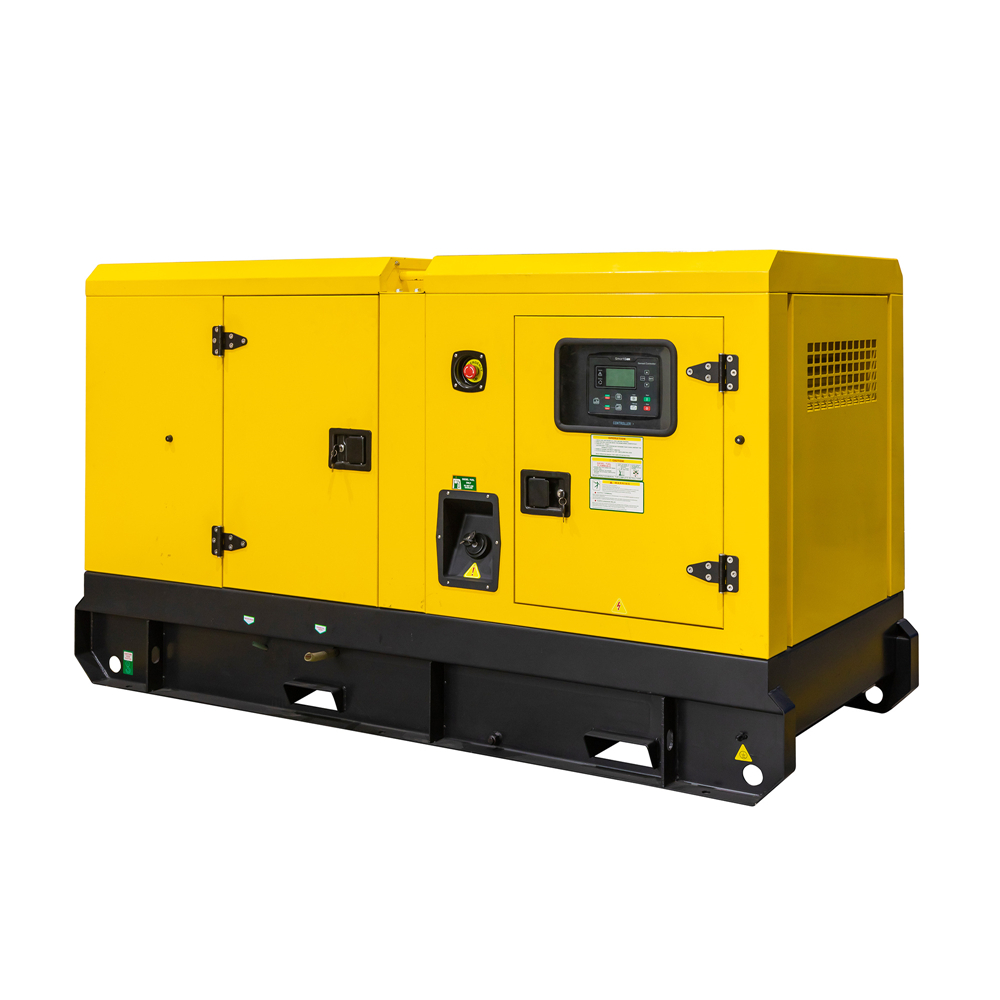
Manufacturers enclose these advanced systems in a heavy-gauge steel or aluminum housing. The interior features thick acoustic foam lining and advanced vibration isolators. This configuration acts as a self-contained, weather-proof noise controlled generator. You absolutely need this architecture for outdoor installations. They dominate in dense urban areas, hospital grounds, and residential neighborhoods.
Their weather resistance protects critical electrical components from driving rain and heavy dust. The canopy includes specialized intake baffles. These baffles allow air to enter while blocking sound waves from escaping. Lockable doors provide excellent security against tampering or fuel theft. The enclosed design significantly boosts the physical footprint of the unit. You must account for this extra bulk during site planning. They represent a complete, turnkey power solution.
Sound operates on a logarithmic scale rather than a linear one. A 25–35 dB difference between two machine types represents a massive acoustic shift. In practical terms, this gap reduces perceived loudness by nearly 90 percent. An open-frame unit typically produces a staggering 90 to 110 dB. This volume mimics a running chainsaw or heavy manufacturing equipment. Workers must wear severe hearing protection near these machines.
Conversely, a silent diesel generator outputs a much lower 65 to 75 dB. This level compares to city traffic or a loud conversation in a restaurant. You can stand near it and speak to a colleague without shouting. This acoustic suppression transforms how facilities plan their site layouts.
Local ordinances strictly govern noise pollution in almost every municipality. City councils often demand specific noise suppression measures for night-time operation. Regulations frequently cap acoustic emissions at 65 to 70 dBA at the property boundary. Deploying open units in regulated zones carries high financial and legal risk. You might face hefty fines from environmental protection agencies.
Authorities can even mandate immediate shutdowns if you lack proper structural isolation. A rigorous acoustic audit prevents these expensive legal hurdles. You must measure the distance from the generator pad to the nearest residential window. Every time you double the distance from the sound source, noise drops by 6 dB. You must calculate this drop carefully before finalizing your procurement.
Silent models naturally demand a 20 to 40 percent premium on the purchase order. However, open units hide massive infrastructure expenses that hurt project budgets. You must construct a dedicated concrete housing for them. You also need to install intake louvers, heavy exhaust fans, and aftermarket silencers. These building materials drive up project capital expenses quickly. You must hire structural engineers and specialized contractors.
Silent units arrive "plug-and-play" ready from the factory. This streamlined deployment lowers overall financial burdens for outdoor projects. We see this constantly in commercial procurement. Evaluating the open diesel generator vs silent diesel generator debate requires analyzing total site prep expenses. Always calculate the cost of bricks, mortar, and labor before dismissing enclosed models.
Lifecycle expenses vary drastically based on your environmental conditions. Unprotected open units suffer accelerated wear when exposed to the elements. Belts, rubber hoses, and sensitive electrical components degrade fast in harsh environments. You must house them properly to preserve their mechanical lifespan.
Silent units inherently provide excellent weather and anti-tamper security. The locked canopy prevents unauthorized physical access. This lowers risk-related costs, vandalism repairs, and weather-induced degradation over the machine's lifespan. Consider the cost of stolen fuel or damaged control panels. The heavy metal enclosure acts as a physical shield against falling debris. This protection reduces emergency service calls and extends the period between major overhauls.
Engineers face a tough thermodynamic reality when designing enclosures. Trapping sound inherently traps massive amounts of heat. Internal combustion engines generate immense thermal loads during operation. Tier-one manufacturers solve this inside silent canopies using clever engineering. They use oversized radiators and high-capacity forced air cooling systems.
They rely heavily on computational fluid dynamics (CFD) modeling during the design phase. This modeling routes calculated airflow directly over the hot engine block. The heat escapes efficiently without letting the noise leak out. They design internal baffles that force sound waves to bounce multiple times. Each bounce absorbs kinetic energy into the acoustic foam. This balance between cooling and quietness defines a premium machine.
Buyers often try to purchase an open frame to save money upfront. They plan to build a DIY enclosure or add a cheap box later. We strongly warn against cheap aftermarket enclosures. They severely disrupt critical cooling airflow pathways. This disruption causes severe engine derating and dangerous wet stacking. It also creates excessive internal ambient temperatures that melt wiring. These extreme conditions quickly void manufacturer warranties entirely.
Here are the main risks of DIY enclosures:
Airflow Restriction: Poorly measured vents choke the engine intake.
Overheating: Standard open radiators cannot push air through thick aftermarket baffles.
Accessibility Issues: Custom boxes often block oil drain valves and filter access points.
Vibration Damage: Non-isolated metal boxes rattle aggressively and cause metal fatigue.
Always buy a factory-engineered enclosure to guarantee proper thermodynamics.
Feature | Open Frame Model | Silent Canopy Model |
|---|---|---|
Cooling Mechanism | Unrestricted ambient airflow | Engineered forced air pathways |
Acoustic Output | 90-110 dB (Industrial volume) | 65-75 dB (Conversational volume) |
Thermal Retention Risk | Extremely low | High (requires OEM engineering) |
Aftermarket Modification | Highly risky; voids warranty | N/A (Factory integrated) |
Small retail shops, residential homes, and remote telecom towers demand lower capacity power. These scenarios frequently require a 10kva generator to sustain critical operations during grid outages. The portable power generator market heavily favors enclosed designs at this capacity tier. Buyers prioritize safety, weather resistance, and strict neighborhood compliance.
A quiet, self-contained unit ensures homeowners avoid ugly disputes over noise pollution. Small enclosed models easily fit onto tight driveways or narrow alleys. Their compact, silent nature makes them perfect for food trucks and mobile medical clinics. They allow small businesses to operate normally without deafening their customers.
Open frames dominate heavy industrial applications across the globe. They deliver continuous prime power for mining, agriculture, and heavy manufacturing. These sectors typically possess dedicated power infrastructure and massive plant rooms. The noise simply blends into the existing industrial background volume.
Conversely, hospitals and data centers need high-capacity silent units. They draw massive power loads but require absolutely minimal acoustic footprints. Patient recovery and office environments demand strict quiet zones. Event power solutions also mandate large silenced canopies. They must run quietly near concert stages, film sets, and public gatherings. Rental fleets almost exclusively stock large canopy models due to their extreme versatility.
Mechanics overwhelmingly prefer working on open generators. They offer unobstructed, 360-degree access to the heavy engine block. Technicians can reach oil filters, coolant lines, and the alternator instantly. This freedom reduces expensive labor time for major mechanical overhauls. Silent generators inherently pose frustrating access challenges for maintenance crews.
You must provide ample clearance for canopy doors to swing completely open. Emphasize models featuring fully removable side panels. Logical service access points minimize costly maintenance downtime. Quality canopies include viewing windows for control panels and external fluid drains. These smart features help bridge the gap between enclosed security and mechanical accessibility.
Open types demand extensive pre-commissioning site prep. You must build a secure, ventilated room first. You must lay specialized exhaust piping through the roof. Silent types speed up installation velocity dramatically. You drop them onto a prepared outdoor concrete pad. Electricians connect them directly to an Automatic Transfer Switch (ATS).
Commissioning happens within hours instead of weeks. This rapid deployment proves essential during sudden grid failures. It also helps companies manage emergency facility expansion projects efficiently. Fast installation reduces contractor labor hours and speeds up facility readiness.
Selecting the perfect generator requires careful site evaluation. Follow these actionable steps to finalize your procurement strategy:
Audit your physical site footprint to verify clearance for canopy doors or a dedicated indoor plant room.
Review local municipal noise laws to ensure your chosen decibel rating complies at the property line.
Calculate complete installation budgets, factoring in concrete pads, structural louvers, and exhaust silencers.
Choose an open frame for isolated industrial zones or pre-ventilated indoor facilities.
Opt for a silent canopy when facing outdoor exposure, rapid deployment needs, or residential proximity.
Assess these parameters carefully before requesting a formal quote. Matching the machine type to your physical environment guarantees long-term operational success.
A: We strongly advise against retrofitting. Aftermarket enclosures carry high installation costs and suffer from poor fitment. They also introduce severe thermal risks. Factory-engineered canopies feature optimized cooling and acoustics. DIY enclosures frequently cause overheating and void manufacturer warranties entirely.
A: No, if engineered correctly. Properly designed canopies precisely account for internal thermal loads. They utilize forced air and oversized radiators. However, deploying them in extreme ambient climates may require custom power derating or specialized high-capacity cooling packages.
A: A super silent model typically runs between 55 and 65 dB at a distance of 7 meters. This is significantly quieter than standard silent models, which generally operate at 65 to 75 dB. They are ideal for film sets and hospitals.
A: We strongly advise against placing open frames outdoors. They lack protection against rain, dust, and unauthorized access. Exposure causes severe electrical hazards and accelerated corrosion. You must house them temporarily under specialized covers if an emergency forces outdoor deployment.