T: +86-139-5050-9685
E: sales@bycpower.com
E: sales@bycpower.com
No. 13, Jincheng road, Tiehu village, Chengyang town, Fuan city, Fujian, China


Views: 0 Author: Site Editor Publish Time: 2026-01-07 Origin: Site


An AC alternator efficiency is a critical factor in ensuring that your power generation system operates optimally, reduces operational costs, and enhances the lifespan of your equipment. At BYC Power, we manufacture high-quality AC alternators designed to provide efficient and reliable power for a range of industrial and commercial applications. In this article, we will explore the various factors that impact the efficiency of an AC alternator and how you can make an informed decision when selecting one for your power needs.
The materials used in the construction of an AC alternator play a significant role in determining its efficiency. High-quality materials can improve the alternator’s performance, reduce energy loss, and increase its lifespan.
Copper is the most commonly used material for the windings in an AC alternator due to its excellent electrical conductivity. The quality of the copper winding is a crucial factor in determining the efficiency of the alternator. Higher-grade copper reduces resistance and minimizes energy loss, which translates into higher efficiency. Cheaper or lower-quality copper may cause higher resistance, leading to energy loss in the form of heat, reducing the overall efficiency of the AC alternator.
The core design of the AC alternator is also important for efficiency. The stator and rotor rely on magnetic materials to generate electricity through electromagnetic induction. High-quality magnetic materials, such as silicon steel, are commonly used because they provide excellent magnetic permeability, reducing losses due to hysteresis and eddy currents. The design of the core also influences the efficiency, as efficient magnetic flux paths allow for better energy conversion and lower losses.
The rotor and stator are the two primary components of an AC alternator that directly impact its efficiency. Proper design of these components ensures that the alternator operates at peak performance, minimizing energy loss and maximizing output.
Efficient magnetic flux paths between the rotor and stator are crucial for the efficient operation of an AC alternator. The rotor generates the magnetic field, and this magnetic field induces an electromotive force (emf) in the stator windings. To achieve maximum efficiency, the magnetic flux should flow through the stator windings without significant loss. Efficient design of the stator core and windings helps ensure that the maximum amount of energy is converted into usable power.
The number of poles in an AC alternator affects its efficiency and performance. Generally, the more poles an alternator has, the smoother and more stable its power output. Alternators with more poles are capable of producing a more consistent AC output, which is important for industrial applications. The design and winding techniques used in the stator also impact efficiency. Advanced winding techniques, such as fractional-slot winding, reduce losses and improve overall efficiency by minimizing resistance and eddy currents.
The efficiency of an AC alternator can vary depending on the load size and operating conditions. Understanding these factors can help you optimize the performance of your alternator and ensure it operates at maximum efficiency.
The efficiency of an AC alternator follows a curve that is influenced by the load size. At lower loads, the alternator may not operate at its optimal efficiency, as it is not generating enough power to run efficiently. On the other hand, at higher loads, the alternator may experience increased losses due to higher current flow and heat generation. The efficiency of an AC alternator is typically highest when it is operating at approximately 70-80% of its rated load. Therefore, it is important to match the alternator’s power output to the load requirements to ensure optimal efficiency.
Another factor that affects the efficiency of an AC alternator is the consistency of the frequency. Most AC alternators are designed to operate at a specific frequency, such as 50Hz or 60Hz, depending on the region. Maintaining consistent frequency is crucial for ensuring stable power output and preventing fluctuations that could affect the efficiency of the system. Variations in frequency can cause power loss and may even damage sensitive equipment connected to the alternator.
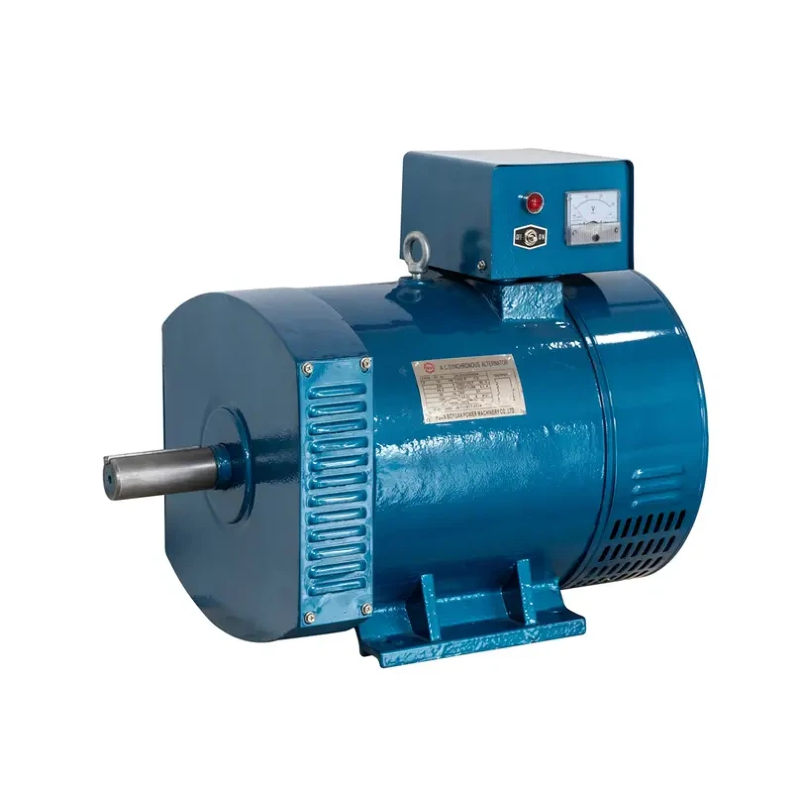
Effective cooling and thermal management are essential for maintaining the efficiency of an AC alternator. Excess heat generated during operation can cause increased resistance and energy loss, reducing the alternator's overall efficiency.
When an AC alternator operates, it generates heat due to electrical losses in the windings and core. If this heat is not properly dissipated, it can lead to higher resistance in the windings and core, which increases losses and reduces efficiency. Efficient cooling systems, such as external fans or water cooling, help keep the temperature under control, ensuring that the AC alternator operates at peak efficiency.
There are two main types of cooling systems used in AC alternators: external fans and natural cooling. External fans help increase the airflow around the alternator, reducing the buildup of heat. This is particularly useful in larger alternators or those operating in high-temperature environments. Natural cooling, on the other hand, relies on the natural airflow to dissipate heat. While it may be sufficient for smaller systems, it is often less effective than fan-assisted cooling in larger or more powerful alternators.
Voltage regulation is a critical factor in the efficiency of an AC alternator. Proper voltage regulation ensures that the output voltage remains stable, even under varying load conditions, and helps maximize energy conversion efficiency.
Voltage regulation helps maintain a constant voltage output by adjusting the field current in the rotor. This regulation prevents voltage fluctuations that could lead to power loss or equipment damage. By maintaining a stable output voltage, the alternator operates at its maximum efficiency, minimizing energy waste and reducing the risk of electrical failures.
Another way to improve the efficiency of an AC alternator is by reducing unnecessary field current draw. The field current controls the strength of the magnetic field in the rotor, but excessive current draw can lead to energy losses. By optimizing the field current, the alternator can generate the required power without drawing excess current, improving efficiency.
Understanding the typical efficiency ranges of AC alternators can help you assess whether an alternator is suitable for your needs.
The efficiency of AC alternators typically ranges from 70% to 85%, depending on the design, materials, and operating conditions. High-efficiency alternators, such as those produced by BYC Power, are capable of achieving efficiency levels at the higher end of this range, reducing energy costs and increasing overall system performance.
The efficiency of an AC alternator directly impacts the total cost of ownership. More efficient alternators consume less fuel and generate less heat, leading to lower operating costs and longer lifespans. Over time, investing in a high-efficiency AC alternator can result in significant savings, making it a more cost-effective solution for both industrial and commercial applications.
In conclusion, the AC alternator efficiency is influenced by various factors, including material quality, rotor/stator design, load conditions, cooling, voltage regulation, and more. Understanding these factors can help you make an informed decision when selecting an AC alternator for your system. At BYC Power, we offer AC alternators that are designed to provide high efficiency and reliable performance for a wide range of applications. Our alternators are built with high-quality materials and advanced technologies to ensure optimal efficiency and long-lasting performance.
If you’re looking for an efficient and reliable AC alternator for your power generation needs, contact us today at BYC Power. Our team of experts is ready to help you choose the right alternator for your system.
1. How does the material quality affect the efficiency of an AC alternator?
High-quality materials, such as copper windings and high-grade magnetic materials, reduce resistance and energy loss, improving the efficiency of the AC alternator.
2. What is the optimal load size for maximum efficiency?
The efficiency of an AC alternator is typically highest when operating at 70-80% of its rated load. Operating at full load or too low a load can reduce efficiency.
3. How do cooling systems impact alternator efficiency?
Effective cooling systems, such as external fans or water cooling, help dissipate heat and reduce energy losses, ensuring the AC alternator operates at maximum efficiency.
4. What is the typical efficiency range for AC alternators?
The efficiency of AC alternators typically ranges from 70% to 85%, with higher efficiency being more cost-effective in the long run.